


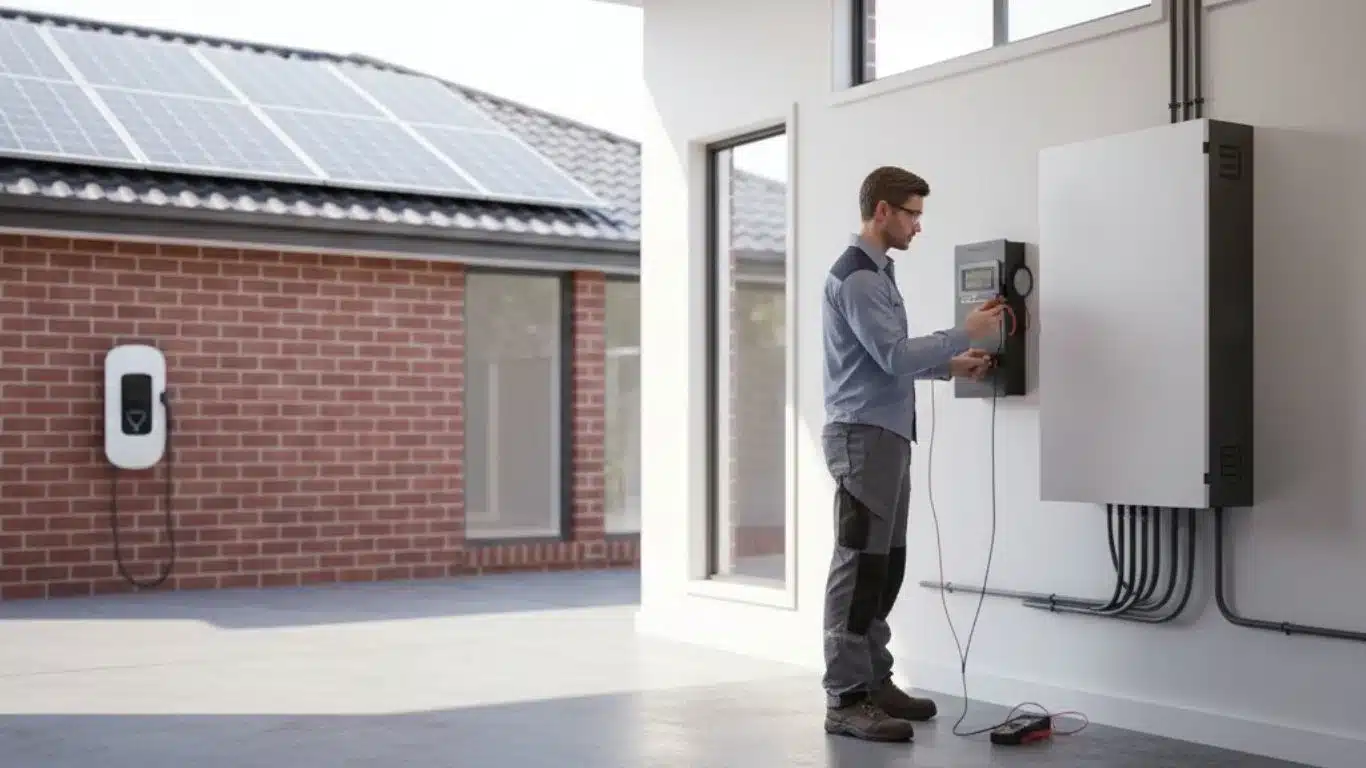
The installation of rooftop solar systems was done through the entire period of Australia’s capital, Canberra, where thousands of solar systems were installed between the years 2010 to 2018. That means there are a very large number of systems in Woden, Tuggeranong, Weston Creek and even areas in Gungahlin that are now well over five years of age with some closer to 12-15 years.
While solar panels often last a long time (25 years or more), it is not necessarily the same for inverters. In fact the disk inverter is commonly the first main component to get issues.
ACT conditions play a role
Canberra is subject to sharp fluctuations in the temperature, cold winter mornings that are below freezing, and hot dry summers. These fluctuations cause stress to be put on electrical components. Add to that varying grid standards, export limits and the ageing wiring found in older suburbs and it’s no wonder many homeowners start noticing little increases and dip into lower performance from their systems.
Oftentimes, there is not an overnight problem with an inverter. Instead, homeowners see:
- Slight decreasing of the daily production
- Occasional warning lights
- Random system restarts
- Based apps, monitoring for irregular data
Understanding common solar inverter faults and what they mean helps you respond early and avoid bigger electrical issues later.
Understanding What Does a Solar Inverter Example What Does a Solar Inverter Alimentary
Before discussing faults, it helps to get the understanding of the inverter’s role.
Your solar panels generate DC electricity (direct current). The homes in Canberra are powered by AC (alternating current) electricity. The inverter covers that DC power to usable AC power to operate your appliances in working condition.
But conversion is not the only part of the job.
Modern inverters also:
- Monitor system performance
- Manage grid connection
- Automatically shut down in case of faults
- Regulate voltage levels
- Communicate with smart metres
In simple terms, the inverter is the “brain” of your solar system.
If it stops working properly, your panels may still be generating electricity but your home won’t be using it effectively, and the grid may reject exports.
Due to its role in handling safety and compliance, inversely, faults that occur in inverters typically lead to protective shutdown rather than simply being allowed to operate unsafely.
The Most Common Solar Inverter Faults in ACT Homes
In Canberra, some inverter problems are being experienced at a higher rate that can be attributed to climate, grid systems and the age of the system.
Below are the most frequently encountered issues that local homeowners experience concerning faults with their homes.
Grid Overvoltage Errors
This is one of the most common problems in ACT suburbs.
When the export of solar power from multiple homes occurs simultaneously – and in particular on mild sunny days – the local grid voltage can increase to more than acceptable limits. If the voltage exceeds the limit on the inverter it will trip itself to shut-out the system to protect itself and the network.
You may find the error messages such as:
- “Grid voltage high”
- “Overvoltage fault”
- “AC voltage out of range”
This doesn’t necessarily mean the inverter is bad. In some cases, the problem is associated with:
- Grid export limits
- Conditions of Street level Voltage
- Cable sizing
- Switchboard configuration
In the older suburbs such as Weston Creek and in parts of Woden the ageing of infrastructure can be a factor in voltage instability.
A good electrician that a more renowned Canberra home owner can determine if it’s a network problem or it’s a wiring configuration that occurs within your home.
Inverter Overheating
Canberra summer time can be harsh.
Inverters placed in garages, external walls oriented towards the west or on roof areas can overheat through peak heat waves.
When the internal temperatures build up too high, the inverter may:
- Reduce output in an automated way
- Display thermal warnings
- Shut down temporarily
Overheating piezoresistive on/off switching elements may shorten component life-span.
Common causes include:
- Poor ventilation
- Direct sun exposure in the afternoon
- Coolants are passing dust build-up in vents from cooling rooms
- Ageing internal fans
While the occasional warning about the temperature might be controllable, the case with consistent overheating might lead to repositioning, better ventilation or, in some cases, inverter replacement.
Isolation Switch Failure
For ACT, solar imparts require having isolation switches at the solar panels and at the inverter positions.
Over time these switches may degrade or in the case of bring-up external rooftop isolators, exposed to rain, UV and frost.
Signs of issues with isolation switch include the following:
- Burn marks
- Cracked plastic housings
- Inverter refusing to start
- Overheating components Smell
Isolation switch faults are an electrical safety issue and she or he should be addressed as a complete part of professional solar inverter repair.
Internal Component Wear
Inverters include capacitors, circuit boards, relays and cooling systems.
The components naturally degrade after 8-12 years.
Symptoms may include:
- Random shutdowns
- Buzzing or clicking sounds
- Inconsistent production
- Communication failures
Age related symptoms can be seen among the older early generation systems in Tuggeranong and Woden.
Sometimes it is possible to carry out inverter repairs. In other instances, internal damage boards become more practical when replaced.
Failure of Monitoring & Communication
Many homeowners believe that their system is normal as there are no warning lights but data provided on a monitoring system begs to differ.
Wi-Fi modules and communication boards can achieve break-downs independent of the power functions of the inverter.
Signs include:
- Monitoring app offline
- Missing production data
- No remote alerts
While this is not always urgent, lack of monitoring renders you less able to detect faults in time.
Wiring Degradation in Older Homes
In some older ACT homes, the original switchboards on the property do not account for the low voltage that is required with modern solar loads.
Loose connections, under-rated cables or old breakers can cause inverter faults.
Common symptoms:
- Frequent tripping
- Intermittent shutdown of the system
- Components on the switchboard that become warm
In these cases the problem is not the inverter, but the electrical infrastructure that is used to support the inverter.
Electrical services Canberra homeowners may call out to usually couples switchboard inspection with inverter diagnosis.
Storm & Surge Damage
Canberra thunderstorms and lightning activity can cause voltage spikes.
Without surge protection, sensitive inverter electronics may suffer damage.
Post-storm warning signs include:
- System won’t restart
- Burnt smell
- No display screen
- Immediate fault code Post reset
Surge-related failures sometimes require inverter replacement, especially if internal boards are compromised.
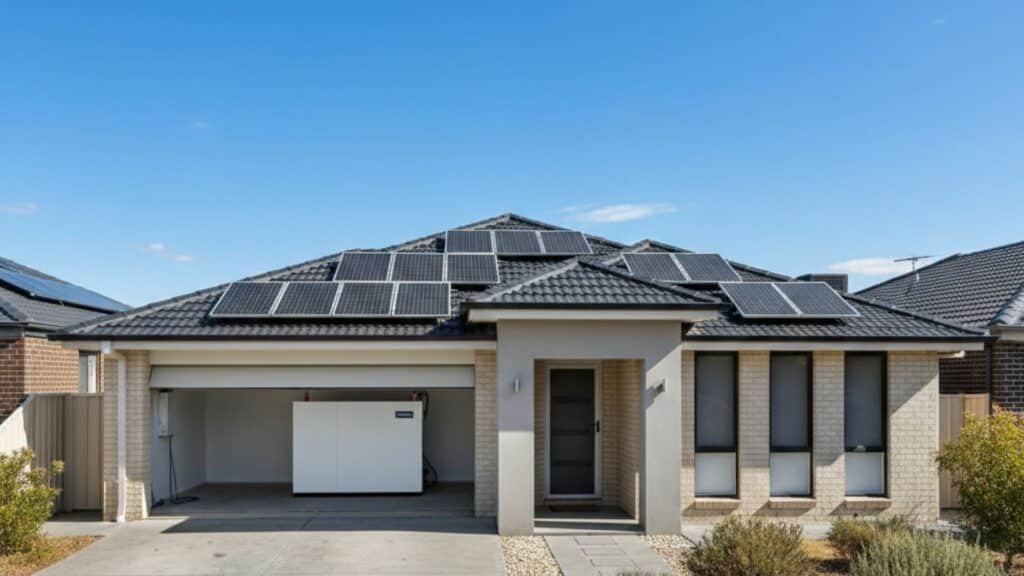
Canberra Specific Conditions that Affect Solar Systems
Local climate and infrastructure have effects on inverter reliability that most people don’t realise.
Cold Winter Mornings
Sub-zero conditions in the morning in Canberra can cause:
- Delayed inverter start-up
- Voltage mismatch errors
- Problems with the connections related to moisture
Frost and condensation can have an effect on exterior components that are incorrectly sealed.
High Summer Heat
Act summers experience prolonged periods of temperature above 35 degree celsius.
Inverters placed in poor ventilated environments fail at a faster rate under continuous heat stress.
Heat cycling, expanding and contracting of the internal components, wear & tear occurs faster and more quickly over a period of time.
Dust & Environmental Wear
Dry summers result in accumulation of dust.
Dust clogs cooling vents and will reduce airflows, which promotes overheating.
Regular inspection helps to prevent slow down in performance
Grid Export Limits in ACT
Evoenergy grid regulations limit how much solar can be exported.
Voltage sensitivity settings may interrupt the inverters with shutdown in the event that the limits are reached.
Sometimes it is a matter of reconfiguration and not replacement, which solves the problem.
Ageing Infrastructure in the Old suburbs
Homes that were built decades ago were not made for:
- Rooftop solar
- Battery storage
- EV chargers
Switchboard upgrades sometimes are required in order to support reliably solar operation.
Costs, Timelines and What to Expect
While some variation in the exact costs is seen, knowing the process helps alleviate some uncertainty.
Step 1: Inspection & Diagnostics
A qualified technician will:
- See inverter displayed codes
- Test AC and DC voltages
- Inspect isolation switches
- Examine breed Connections to Switchboard
- Review monitoring data
This determines whether the problem is an internal, wiring-related or grid-related problem.
Step 2: Repair vs Replacement
Then if the inverter is under warranty, then repair will be arranged through the manufacturer.
If over 8-10 yrs of age replacement may be more cost effective in the long term.
Factors considered include:
- Availability of parts
- Overall system condition
- Compatibility (with existing panels)
- Upgrade opportunities
Step 3: Timeline for Repair or Replacement
- Minor wiring or switch problems: generally done same day
- Board level repair: Could require ordering parts
- Full inverter replacement: will typically be one visit once an equipment is available
After installation there is full system testing for compliance with ACT grid standards.
Common Mistakes we can Canadians Make
Small problems can become big if they are ignored.
Common mistakes include:
- Ignoring tiny warning lights
- Resetting Inverter Time and again without diagnosis
- Procrastinating post storms inspections
- Assuming decreased output as ‘just winter’
- Opting for the non-licensed repairers
- Medication for the customer: Changing out solar panels when the inverter is faulty, only
Education and early diagnostics normally save money in the long run.
When to Call a Professional
You should obtain professional assessment if you notice:
- sudden decrease in daily production
- Persistent error codes
- Repeated shutdowns
- Burning smells/ strange sounds
- Visible damaged switches or wiring
- Monitoring alerts of erratic voltage
With inverters, where grid connection and safety devices are managed the professional evaluation is important.
Solar inverter repair involves electrical risk and ACT compliance.
A licensed electrician Canberra homeowners depend on knows:
- Local grid regulations
- Standards developed by Clean Energy Council
- Process of safety certification
Attempting DIY repairs may void warranties and create complications for insurance.
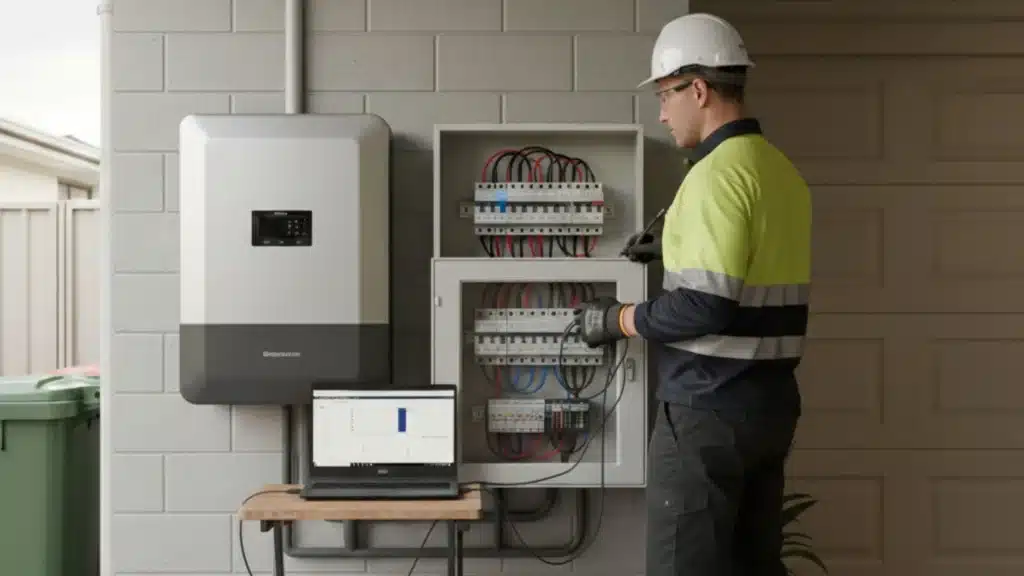
Making Sense of the Overall Big Picture
In a lot of cases inverter faults will demonstrate a broad system consideration.
For example:
- Older Systems May Benefit from Modern Inverter Technology
- Exporting limited homes may consider battery ready upgrades
- Switchboard Updates: Switchboard upgrades will enhance overall safety
- Immunity to Storms by train Surge protection
This comprehensive guide to solar inverters and electrics in Canberra explains how individuals can make sense of their own systems and make informed decisions about repairs and upgrades for the system.
Taking a whole system approach often avoids repeating problems.
What ACT Homeowners Need to Know
- Inverters are Keeping a System the Cornerstone of the System 3.
- Canberra Can affect inverter life span
- Grid voltage oscillations than are commonplace locally
- Early diagnose helps a larger issues
- Many faults are of the wiring or configuration type
- Licensed professionals that provide safety and compliance
- Informed choices save in the electrical cost
So in reality solar systems are long-term investments. Regular inspection and on time action, they keep them running efficiently in Canberra conditions.
Frequently Asked Questions
1. Solar inverters in Canberra – How long do these last?
Most Inverters in Canberra last anywhere between 8-15 years. Lifespan is dependent on the place of installation, ventilation, the quality of the system, and exposure to temperature extremes. Units in shaded, loaded with ventilation for quite some time last longer compared to one uncovered to direct sun or severe heat cycles.
2. What leads to the failure of inverters during the winter season?
The cold morning will result in voltage irregularities during starting time. Moisture caused by frost and condensation can also affect external switches/connections. As many systems are aimed at cold weather, aging components may not cope easily if exposed to repeated cycles of freezing and thawing nicotine as is typical in the ACT.
3. Can I replace my inverter without my panels?
In many cases, yes. Panels are generally more long lived than inverters. However, compatibility must be determined to ensure the new inverter is the same capacity and voltage of panels. A professional inspection ensures the upgrade meets the standards of the grid connection with ACT grid.
4. Is the repair of the inverter usually worth it?
Depending on age and type of fault, the inverter’s age. Minor wiring or switch faults can be easily repaired. If you have an inverter more than 10 years old and there are internal issues that are not working then it may be more practical and reliable in the long run to replace.
5. Do I need a licensed electrician for solar system faults?
Yes. In the ACT, all works involving grid-connected solar systems must be done by the licensed professional. This is to ensure compliance with electrical safety laws, protection of warranties and maintenance of insurance validity.
Solar systems throughout Canberra are still performing well, when well subsequently maintained. Understanding common inverter faults helps homeowners act early and can protect your investment and keep your home powered safely and efficiently.If your solar system isn’t performing the way that it should, don’t ignore the signs. The team at Woden Valley Solar & Electrical ensure they can inspect, diagnose and discuss your options so you can make the right choice for your home. Contact to seek honest advice and solutions for local reliable service heads across Canberra.