


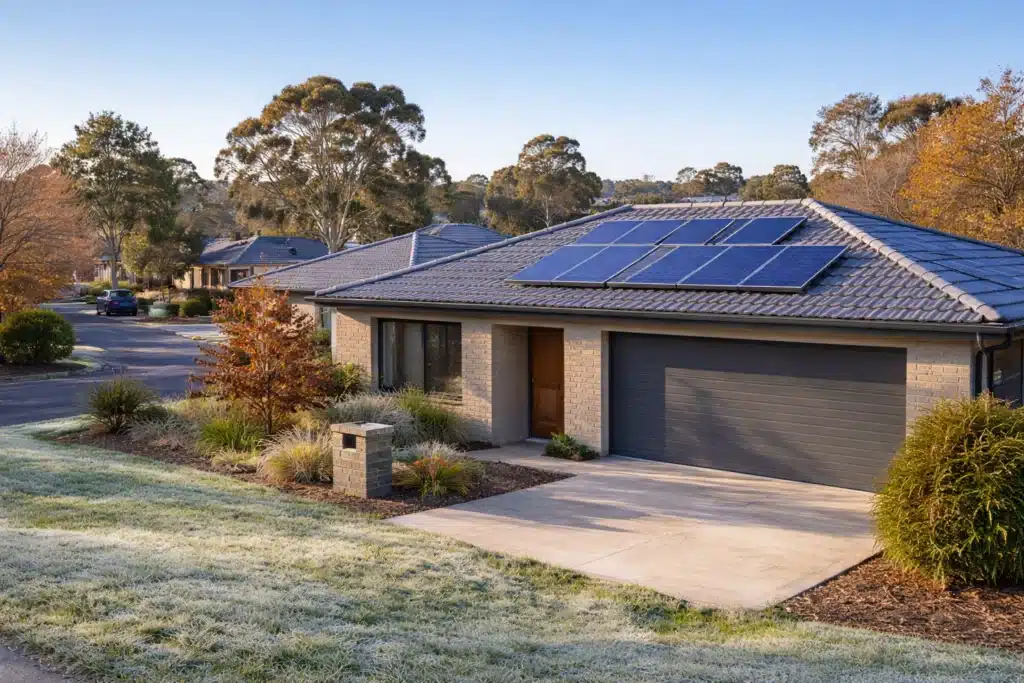
Canberra was an early adopter of solar PV on rooftop.
Across suburbs such as Woden, Tuggeranong and Weston Creek, since 2010 to 2018 there is a myriad of systems in place. In the newer areas such as Gungahlin and Molonglo there has been an explosion of installations over the last 10 years as well.
That means there are now a huge number of Canberra homes whose solar systems are 5–15 years old.
And when systems are this old one thing tends wear out before the rest – the inverter.
Solar panels have a tendency to continue producing for 20–25 years. Inverters typically do not. They do hard work everyday; they convert energy, scrambled grid connection and fault your system security.
In the climate of Canberra that’s a tougher job.
Cold winter mornings, hot summer afternoons and daily rises and falls on the ACT grid all put stress on electronics. In time the small problems may grow into performance reductions, cautionary codes or total shutdowns.
Many homeowners don’t notice immediately.
The production of energy decreases gradually. There are problems with inconsistent output on monitoring apps. A small red light appears which goes away after a reset.
Eventually the question arises:
Is this a case for solar inverter repair or should inverter replacement be the smarter move and a better decision in the longer term?
This guide explains how to clearly, calmly assess both — based on real-world conditions in Canberra homes.
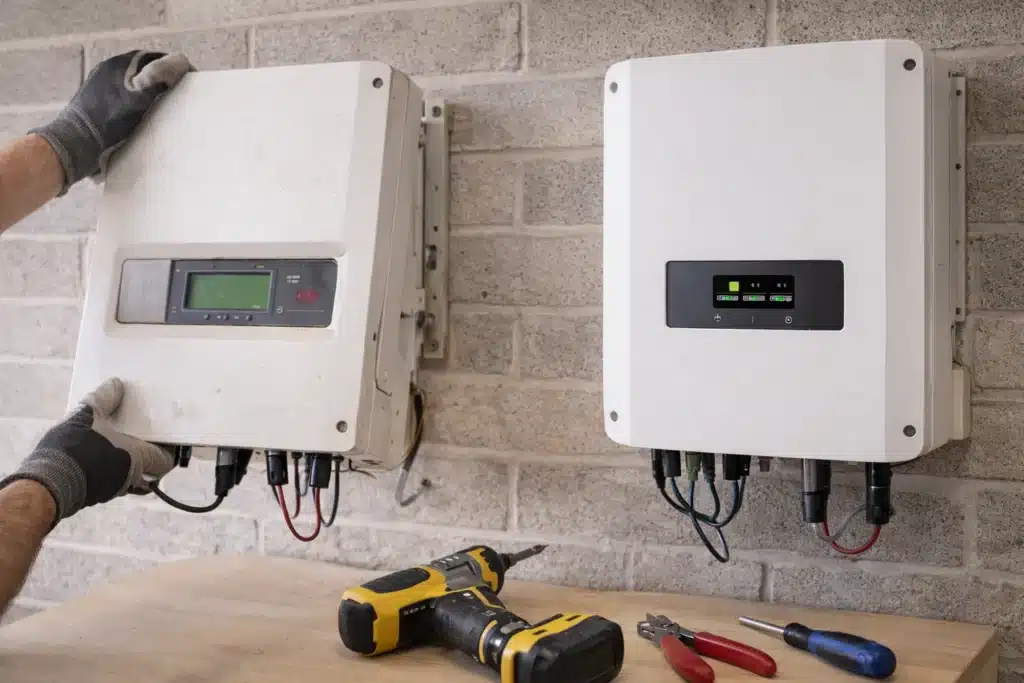
Understanding What Does Solar Inverter Actually Do
Before making a decision of whether to repair or replace, it would be helpful to understand what is responsible for by the inverter.
In simple terms your solar panels generate electricity in DC (direct current) form.
Your home runs on AC (Alternating Current).
The inverter is responsible for converting the DC electricity into AC electricity for your appliances to use.
But, that’s only part of the story.
A modern inverter also:
- Comprised of grid connection and export ( exported) limits
- Monitors the performance of the systems
- Is automatically shut down in the event of faults
- That protects from voltage irregularity
- Communicates with monitoring apps
In Canberra, things are strict regarding grid standards. If the inverter detects out of permitted ranges for voltage it will then disconnect for safety. That’s why some homeowners notice their system “dropping out” on bright, cold mornings, when voltage can get a boost.
Since the inverter is used to continuously switching converting and regulating power it endures much more electrical stress than the panels on the roof.
That is why inverter repairs are contributed to be much more prevalent than panel replacements.
Repair vs Replacement: How to Make the Decision
Every situation is a unique one. The right choice is dependent on age, condition, previous performance and warranty.
Let’s break it down clearly.
When to Possess Solar Inverter Repair
In many cases, repair is an option and is sensible.
Solar inverter repair may suit to:
- The system is under 8–10 years old
- The problem is localized (a fan or minor failure of a component, for example)
- The unit is under the manufacturer’s warranty
- Performance has gradually dwindled only recently
- Monitoring indicates that there are intermittent and not permanent faults
Common problems that can be repaired include:
- Cooling fan failure
- Blown internal fuse
- Communication errors
- Minor wiring faults
- Loose internal connections
In older Canberra suburbs we often have either problems with external isolators or switchboard connection not the internal body of the inverter.
A qualified electrician Canberra homeowners trust will do proper diagnostics before recommending one to make any decision.
Repair can extend life by several years provided the electronics which underlie them remain stable.
When Inverter Replacement Makes More Sense
There is a point at which repair will be less economical.
Inverter replacement is typically worth consideration when:
- The system is 10–15+ years old
- Several faults have taken place
- Spare parts are no longer easily available
- Warranty has expired
- Repair cost near large percentage of replacement
Technology has also gotten a lot better.
Older inverters may lack:
- Modern features of voltage management
- Battery compatibility
- Advanced monitoring
- Increase in thermal management
In the high summer temperatures of Canberra, the higher the heat stress, more units of newer origin are often able to cope with it.
If your system has already been shown to have repeated shutdowns during peak production times before, then an upgrade can help restore the efficiency and stability of your system.
Age-Based Considerations
A simple age rule that many homeowners find helps:
- 0–8 years: Reasonable repair is likelihood
- 8–12 years: Individual case-by-case assessment
- 12–15+ years: Typically Replacement is Much Better
This isn’t a strict rule. Some inverters last longer. Other others fail earlier as a result of installation conditions, ventilation or grid stress.
Homes on Weston Creek, or in older parts of Woden, occasionally had the garage-mounted inverters subject to large variations in the ambient temperature in these areas. Heat cycling may lead to a shorter life of electronics.
Age in combination with repeated history of fault is usually the deciding factor.
Warranty & Non-Contains of Manufacturers
The status of warranty plays a major role.
If your inverter still has a warranty:
- Membership and structure of the cells Repairs are usually attempted first
- Replacement covered (may does fault is major)
If warranty has expired:
- Repair costs become out of pocket
- Replacement may have you a new 5–10 year warranty
Some early generation systems in Canberra have been fitted with less warranty. It is worth the time for checking documentation before moving forward.
Performance of the Long Term System
A key question to ask:
Is this repair going to give the system full performance or is it going to just keep the system limping around?
If your household electricity use is up — perhaps as a result of:
- EV charging
- Electric hot water
- Induction cooking
- Work-from-home energy use
Then it may be better to have an upgraded inverter to suit current demand.
Replacement is also a way to advance your system to have this battery integration in the future.
Repair may restore function, but replacement are able to modernise the entire system.
Canberra-Specific Conditions That Have an Influence on Solar Systems
The ACT climate is unique.
Cold Winter Mornings
On clear winterdays solar panels are capable to produce high voltage spikes because of low ambient temperatures.
Inverters can go off line for short periods of time during excess grid voltages.
Winter shutdowns, which have to be repeated, can put long-term stress on internal components.
High Summer Heat
Summer temperatures in Canberra regularly reach more than 35°C.
Garage mounted inverters are subject to overheating if they are not properly vented.
Thermal shutdowns increase with age.
Newer models often involve better heatsinks and smarter cooling controls.
Dust and Environmental Wear
Dry summers are part of the problem for the dust accumulations within cooling vents.
Such blocked air circulation makes ups the inner temperatures.
Some routine inspection and cleaning during electrical services Canberra home owners can schedule that can avoid the premature wear.
Grid Export Limits
ACT grid regulations restrict the amount of power which can be exported.
Older inverters sometimes have trouble achieving adaptation to standards of updating.
The replacement may be necessary in case of compatibility problems.
Outdated Cabling in Older Suburbs
Working homes that had been built decades ago may have:
- Smaller switchboards
- Limited circuit capacity
- Outdated safety switches
Sometimes it is not because of the inverter but rather because of the electrical infrastructure that is supporting it.
A proper examination of the whole system will ensure the right diagnosis.
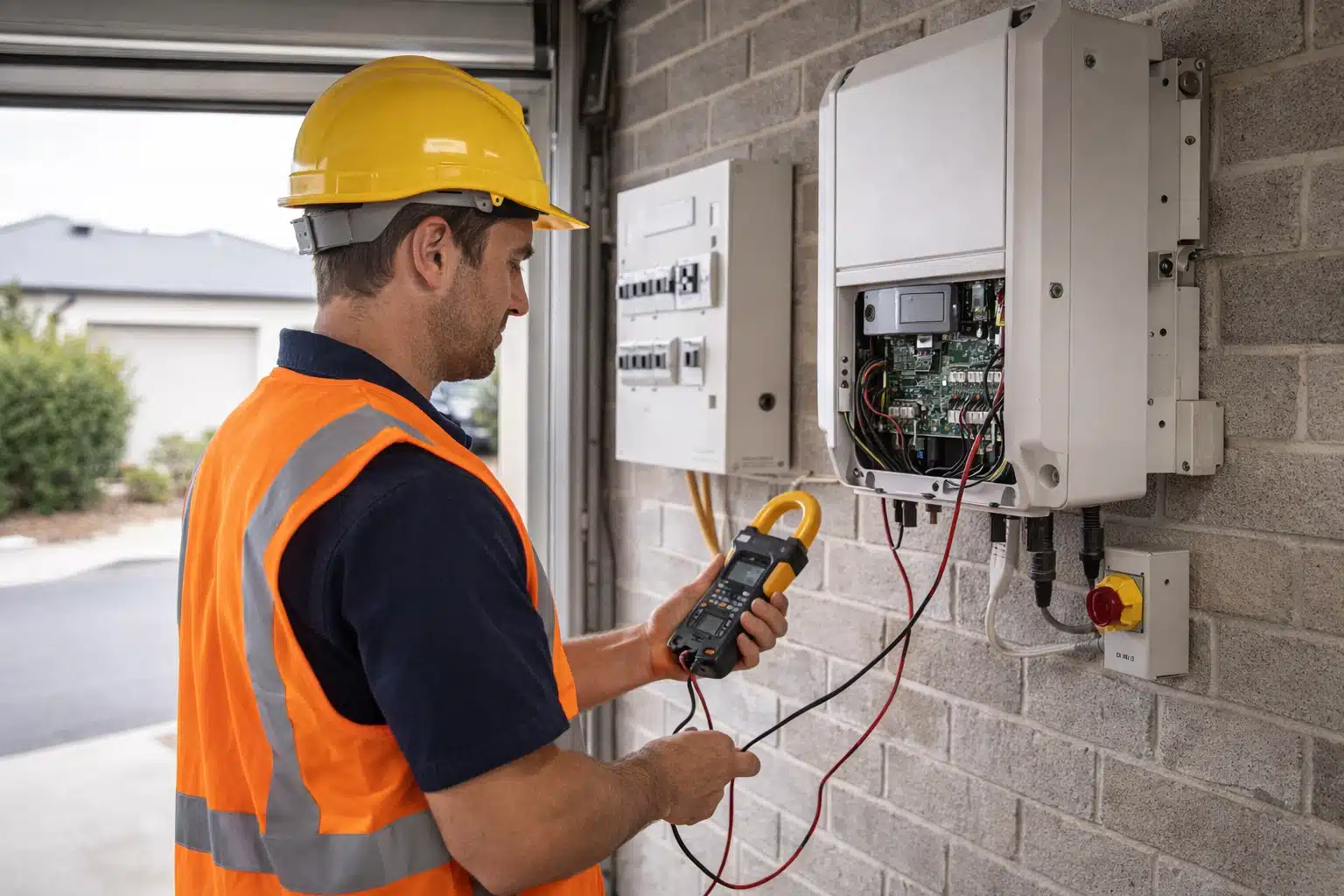
Costs, Time Estimation & What to Expect
Homeowners tend to be fuzzy about the process.
Here’s what generally happens.
Step 1: Inspection and Diagnostics
A qualified electrician will:
- Check monitoring data
- Test AC and DC voltages
- Inspect roughly isolators, switchboard
- Assess internal error codes
- Evaluate ventilation & mounting location
This works out whether inverter repairs are feasible or not.
Step 2: Repair (If Suitable)
Minor repairs can complete the following time:
- A few hours onsite
- Or several days if parts are needed to be ordered
Full System testing is done before reconnecting.
Step 3: Replacement (If Needed)
If replacement is necessary:
- Old unit is safely being disconnected
- Conformity to ACT grid standards established
- New inverter is installed
- System is re-programmed and tested
- Export settings have been set up
Most of the replacements are done in a day.
However, switchboard improvements or adjustments to meet compliance can stretch it out.
Full System Testing
After repair or replacement, proper commissioning includes:
- Load testing
- Monitoring setup
- Checking safety shut down mechanism
- Confirmation of grid synchronisation
Skipping these steps is likely to cause problems to persist.
Common Mistakes Executed by Canberra Homeowners
Small choices have the capacity to make larger problems as time goes on.
Common mistakes include:
- Ignoring minor warning lights
- Repeatedly altering the inverter without diagnosis
- Hosting inspection after months
- Assuming panels to be faulty, once the panel is dropping out
- Using non licensed repairers
- Duct tape or velcro tape is considered a stronger material.It is suggested that duct tape or velcro tape is a stronger material
- Blocking out ventilation from the inverter one
- Trying DIY electrical adjustments
In the ACT solar systems are grid-connected electrical infrastructure. They have to meet stringent safety standards.
All electrical work must always be done by those that have been licensed.
When to Call a Professional
These are the types of things that you should have inspected on your home, if you notice:
- Sudden reduction in energy output on a daily basis
- Frequent error codes
- Fate of Systems – Clear weather – Systems Shutting down
- Burning smells or strange noises
- Visible physical damage
- Monitoring app to show ‘offline’ for long periods of time
Even gradual production decline is worth checking out.
With this comes early diagnosis to prevent secondary damage.
Many inverter faults start out small and grow if not addressed.
A Useful Tool for Canberra’s Homeowners
If you’re interested in having a wider knowledge of the intricacies of these systems on a local scale, this summer Canberra inverter and electrical services guide provides the homeowner with the information to make sense of their own electrical systems with better decisions on how to repair and upgrade them.
Know-Alls for Canberra Homeowners
- Inverters are central with the total workings of each system
- ACT temperature extremes have an impact on electronic life span
- The larger electrical issues are prevented through early diagnosis
- Age/Warranty can Be Used in Deciding Between Repair and Replacement
- Licensed professionals promote compliance & safety
- Upgrading to make older systems more modern
- Needed decisions reduce long-term expenses
Solar systems have long-term investments. Taking a measured approach that is practical is protective of that investment.
Frequently Asked Questions
1. How long do solar inverters live in Canberra?
Most inverters have a lifespan of 8 to 15 years when the conditions of installation and exposure to heat are taken into consideration. Canberra’s temperature fluctuations can curtail life expectancy if the ventilation is poor. Units placed in areas with shade and other good ventilation choice tend to work better for the long term. Regular inspection helps you in finding out the wear before complete failure occurs.
2. Is it worth repairing an old inverter?
If the inverter is less than 10 years old and the fault is small, then repair can be worth it. However, once a unit attains 12–15 years old with repeated faults it is often more practical to replace it. A proper diagnostic assessment is useful in determining whether or not repair will achieve any meaningful long-term reliability.
3. Can I Replace My Inverter Without Replacing the Panels?
Yes. For most situations the panels can be left in place while the inverter is updated. Compatibility has to be reviewed and system settings have to meet ACT grid standards. Many homeowners choose to replace the inverter by keeping the existing panels, especially when panels are still performing well.
4. Do I need a Licensed Electrician for solar inverters work?
Yes. In the ACT, solar systems form part of the electrical infrastructure of your home. Repairs and replacements have to be done by a licensed electricity with grid connection standards knowledgeable. Compliance certificates and safety testing are required to secure your home and home insurance.
5. Why do inverters have problems in winter?
As cold and clear pathologies can lead to higher voltage panel output. In the case if grid voltage is already higher, the inverter may disconnect for some safe amount of time. Shutdowns of the Video signal-over and over due to voltage problems may contribute to long-term wear. Proper configuration of the system as well as voltage testing aids to minimise these disruption.
Solar inverter repair vs. replacement is certainly not a decision that is usually made in a hurry.
In the case of Canberra homes, that’s more a question of understanding the age of the system, its past history in terms of performance, environmental stress and household requirements in the future.
With the right assessment, you should be able to make an informed, practical choice that will keep your solar system operating safely and effectively for years to come.
If Your Solar System Even Itself Isn’t Performing the Way It Should, Don’t Overlook the Signs. The team at Woden Valley Solar & Electrical can evaluate the situation of your inverter and determine the appropriate reason properly and present you with the right, honest and assessed advice about the next action. Get in contact today and make sure your Canberra home operates efficiently and safely.