


Solar Rebates ACT
The appearance of solar power has become a citywide occurrence among Canberra rooftops and justifiably so. In Australia, solar energy is a feasible and available choice to the local homeowners since the ACT has among the most friendly policies regarding renewable energy. But, knowing the dynamics of the solar rebates and solar incentives can be quite disorienting to learn, particularly when you are new to solar.
This guideline outlines Solar rebate ACT and incentives with simple language. The text is the one written across Canberra homeowners who would like to know what support they can receive, how this can be received and how these incentives would be integrated into the overall experience of having solar installed at home.
Regardless of whether it is your first time attaching solar or you just cannot get your head around the question of the eligibility of the rebates, this article takes it step by step.

The importance of Solar Rebates to the Canberra Homeowners
Solar installation is a long-term project. Although the dividend raises are achieved after many years the initial expense may be an obstacle to certain families. Herein ACT incentives come into play.
Rebates and schemes on the solar are meant to:
- Cut installation lifestyle.
- Ensure that solar is more available to more households.
- Canberra targets of renewable energy Support Canberra.
- Promote energy efficient homes.
To homeowners, knowledge of these incentives can save the difference between putting off an action and taking a step in the light of the day.
Solar Incentives on the ACT
The ACT does not work as one cash rebate as it is traditionally understood. Rather, support is developed through a convergence of federal and territory-based programs in cooperation with one another.
Main Types of Incentives
The ACT homeowners can avail:
- Federal solar incentives
- Energy schemes on the basis of territory.
- Low-rate option of financing.
- Excess solar energy feed-in tariffs.
They have different roles to play in minimizing costs or enhancing long-term value.
Introduction to Federal Solar Incentives
Although this guide is Canberra-specific with the ACT in consideration, federal incentives are applicable to Canberra households as well.
Small-scaled Renewable Energy Scheme (SRES)
The key federal incentive on solar at residential level is the Small-scale Renewable Energy Scheme.
Under this scheme:
- Systems which are eligible receive Small-scale Technology Certificates (STCs).
- The certificate quantity varies with location and size of the system.
- The cost of the certificates decreases the initial cost of systems.
Practically, the vast majority of installers transfer this break to your quote and, hence, you do not have to organize certificates on your own.
Why This Matters in Canberra
Excellent solar conditions in Canberra or Australia generally ensure that the homes earn a decent number of STC which is a considerable cut on the initial expenses of installing the solar power units.
Solar Rebates of ACT and Support Alliances
In addition to the federal incentives, the ACT also has other programs that are aimed at assisting households that switch to cleaner energy.
The Sustainable Household Scheme.
The Sustainable Household Scheme is one of the most important ACT initiatives.
This scheme provides:
- Interest free loans to qualified members.
- Financing of solar systems, batteries and other upgrades.
- Flexible repayment terms
Instead of rebate, this program assists households to afford expenses in the long term.
Who Is Eligible?
Eligibility depends on:
- Household income
- Property ownership
- The kind of upgrade undergoing installation.
There is a large number of Canberra home owners who are eligible, but it is better to check and ensure that you are eligible before there are any delays.
The operation of Feed-in Tariffs in the ACT.
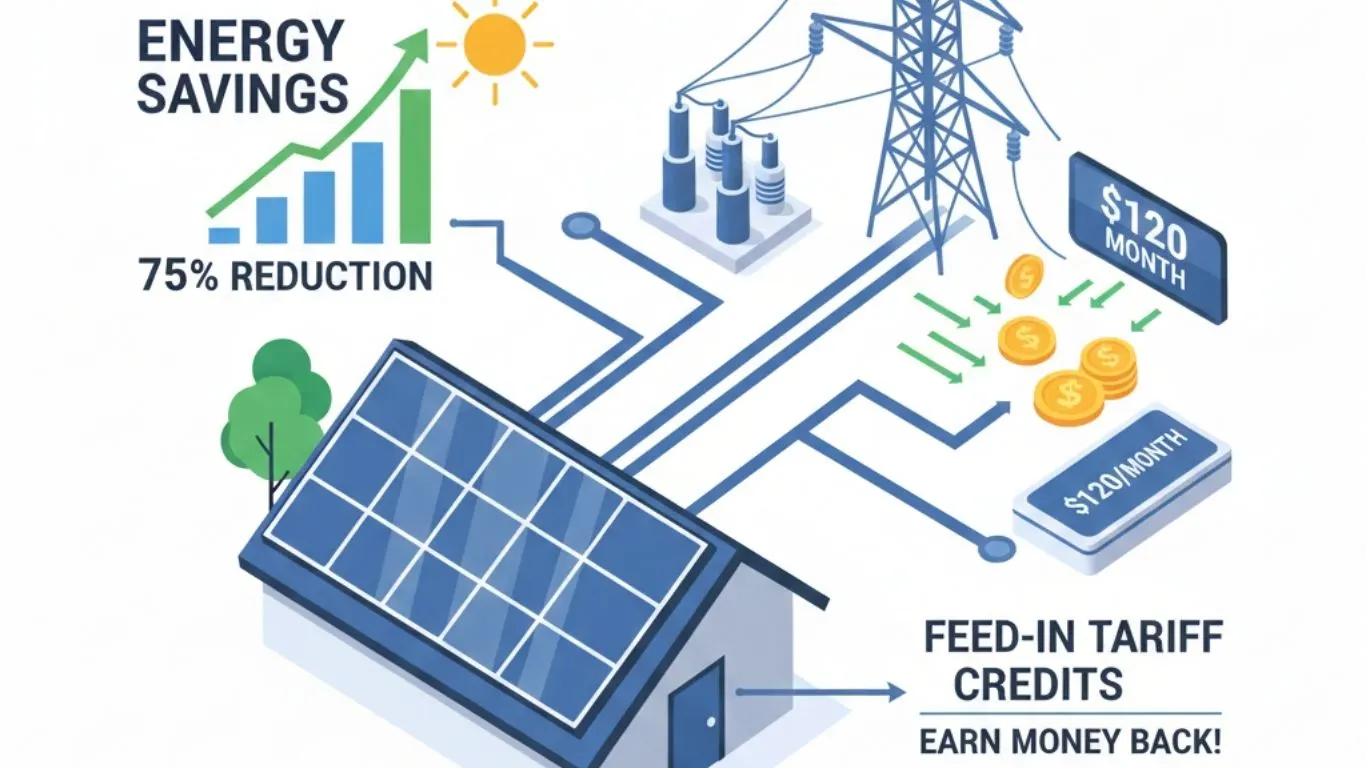
Feed-in tariffs enable homeowners to have credit on the excess solar energy that they export to the grid.
Key Points to Understand
- Electricity retailers set feed-in tariffs.
- There are differences in rates between providers and plans.
- The credits show up on your power bill.
Though the feed-in tariffs are not as high as historic ones, they bring about savings in the long term.
The Reason Feed-in Tariffs Will Continue to Matter.
Even small export credits will suffice:
- Tax off mutual house electric prices.
- Enhance system payback in the long run.
- Efficient system design of rewards.
This can be optimized by the selection of the appropriate system size and usage habits.
Step-by-Step: Solar Rebated in Canberra
When you know the process you will probably end up with less confusion and you also know what to expect.
Step 1: Determine Your Eligibility.
Check before asking to be quoted:
- Income ridges of households.
- Storey House Requirements in property ownership.
- System eligibility requirements.
This is especially significant with respect to ACT-based schemes.
Step 2: Select an Accredited Installer.
Incentives need installers to be accredited. This is to ensure that systems are safe and high performance.
Step 3: Incentives at Quoting Stage.
In most cases:
- The federal incentives are applied directly on your quote.
- Loan options are described individually.
- The installer is in charge of paperwork.
Step 4: Installation and Connection.
On it you are installed and can receive feed-in tariffs since your system is linked to the grid.
How and why Canberra Climate is Important to Solar Incentives
This system performance is indirectly influenced by the climate of Canberra and has an impact on the value of incentives.
Cold winters and Solar performance.
Lower temperatures may enhance panel efficiency although days are not as long in winter. Properly developed systems have a high level of reliability throughout the year.
Well-presented Snow and Robust Sunshine.
Canberra has a large number of sunny days per year, which encourages the steady production of solar power and enhances the profits on incentives.
Housing Styles at Canberra and consideration of Incentives
The homes in Canberra are diverse as some are old brick houses and some are modern estate developments.
Older Homes
Older homes may require:
- Switchboard upgrades
- Roof condition assessments
These may influence final installation costs, even in the case of incentives.
Newer Homes
Newer properties often have:
- Modern electrical systems
- Improved solar roof designs.
This may make it simpler and save extra expenses.
Costs: The impact of rebates on Pricing of Solar installation
Incentives only diminish costs and do not eradicate them.
What Rebates Do Cover
Incentives can:
- Minimum initial system prices.
- Enhance it with affordability by financing.
- Promote energy conservation in the long run.
What Rebates Do Not Cover
Rebates are usually not provided to:
- Roof repairs
- Non-solar solar electrical upgrades.
- Additional capabilities of the system.
Realizing this will create grounded expectations.
Timeframes: When Incentives Are Used
The time of the year is important in planning solar installation in Canberra.
Typical Timeline Overview
- Eligibility and quote verifications: 1-2weeks.
- Application and approvals on incentives: 1-3 weeks.
- Installation and grid connection: a number of weeks.
Delays may take place in periods of high demand.
Seasonal Demand in Canberra
Solar installations are popular between spring and early summer. It is better to plan and avoid waiting.
Widespread Myths on ACT Solar Rebates
Homeowners make decisions late because of misconception.
Solar Rebate Cash Payments.
Rebates are paid out of pocket in most circumstances as opposed to being paid directly.
“Only New Homes Qualify”
The old homes may also be considered subject to eligibility.
Rebates Pay the Full Price of the System.
Incentives do not imply free systems as they decrease costs.

Canberra-Specific Solar Solutions What to Look for
Rebates do not only make up the equation. System design still matters.
Systems Catering to Local Conditions.
Find solutions that take into account:
- Winter sun angles
- Roof orientation
- Shading from trees
Securing your investment into the future.
Good systems allow for:
- Battery upgrades later
- More energy consumption in the household.
- Electric vehicle charging
This is to make sure that incentives would not promote one-day benefits.
A Guide to Rebates and Incentives through Installers
The role of experienced solar installers is to make incentives available.
Paperwork and Compliance
Installers are normally in charge of:
- Incentive applications at federal level.
- ACT scheme documentation
- Grid connection approvals
This minimizes the administration pressure on the homeowners.
Local Knowledge Matters
Canberra regulations are complex and installers who are conversant with them save time and avoid mistakes that may delay approvals or influence eligibility.
Bigger Picture of Solar in Canberra
A section of the bigger shift towards cleaner constituents of energy in the ACT involves solar arrives. These are geared towards household support coupled with promoting smarter usage of energy.
To have a greater insight into the system design, costs and long-term planning, this broad guide to the solar panels and solar solutions in Canberra gives an idea on how home owners can use the right system in order to save long term.
The Major Learnings as an ACT Homeowner
- ACT incentives are generated to decrease initial expenditure and enhance price accessibility.
- Programs of federal and territory cooperate.
- The eligibility is based on the household and property factors.
- Incentive paperwork is normally handled by installers.
- Maximising the long-term value maximises good system design.
Knowing how rebates operate would enable the Canberra homeowners to make informed confident choices regarding solar.
Frequently Asked Questions
What are the rebates available to homeowners in the ACT on solar?
This involves the small-scale renewable energy scheme and territory-based schemes like the Sustainable Household Scheme which are offered to the ACT homeowners. These programs save on initial expenses or offer interest free loans instead of cash payment. Eligibility requirements vary with the household earnings, possession of property and type of system and therefore it is respectable to check the requirements early.
Which time frame does the receipt of solar incentives take in Canberra?
Incentives are in general used during the quoting process, but not after installation. The prices of the system are generally adjusting instantaneously in response to federal incentives. The ACT-based schemes might need extra approvals, which might take several weeks based on the demand and accuracy of documentation.
Are the solar rebates applicable to Canberra's older homes differently?
Even older homes do not not qualify to receive solar incentives though extra requirements may be necessary. Upgrades in switchboards or roof tests are even required which also may influence final expenses. The incentives are normally offered to the solar system itself, but not associated electrical or structural upgrades.
Do sun rebates work or not during the winter weather of Canberra?
Winter conditions do not lead to reduced rebates. Actually, the cold climate of Canberra has an ability to enhance panel efficiency. Winter days are shorter, although professionally designed systems keep producing remains of power during the year, which contributes to the long-term efficiency of incentives.
Do I want a solar installer knowing about rebates?
Yes, experience with ACT incentives is significant to installers. An installer who is well-informed about the local schemes is able to complete the paperwork correctly, verify the eligibility, and prevent delays. This aids in the correctional application of incentives and in the maintenance of a smooth run of the installation process till completion.
Thinking about solar for your Canberra home?
Speak with a local team that understands ACT regulations and real household energy needs. Woden Valley Solar and Electrical designs practical, compliant systems built for long-term performance.
Get clear advice, realistic costs, and a system that’s right for your home.
Contact Woden Valley Solar and Electrical today to get started.