


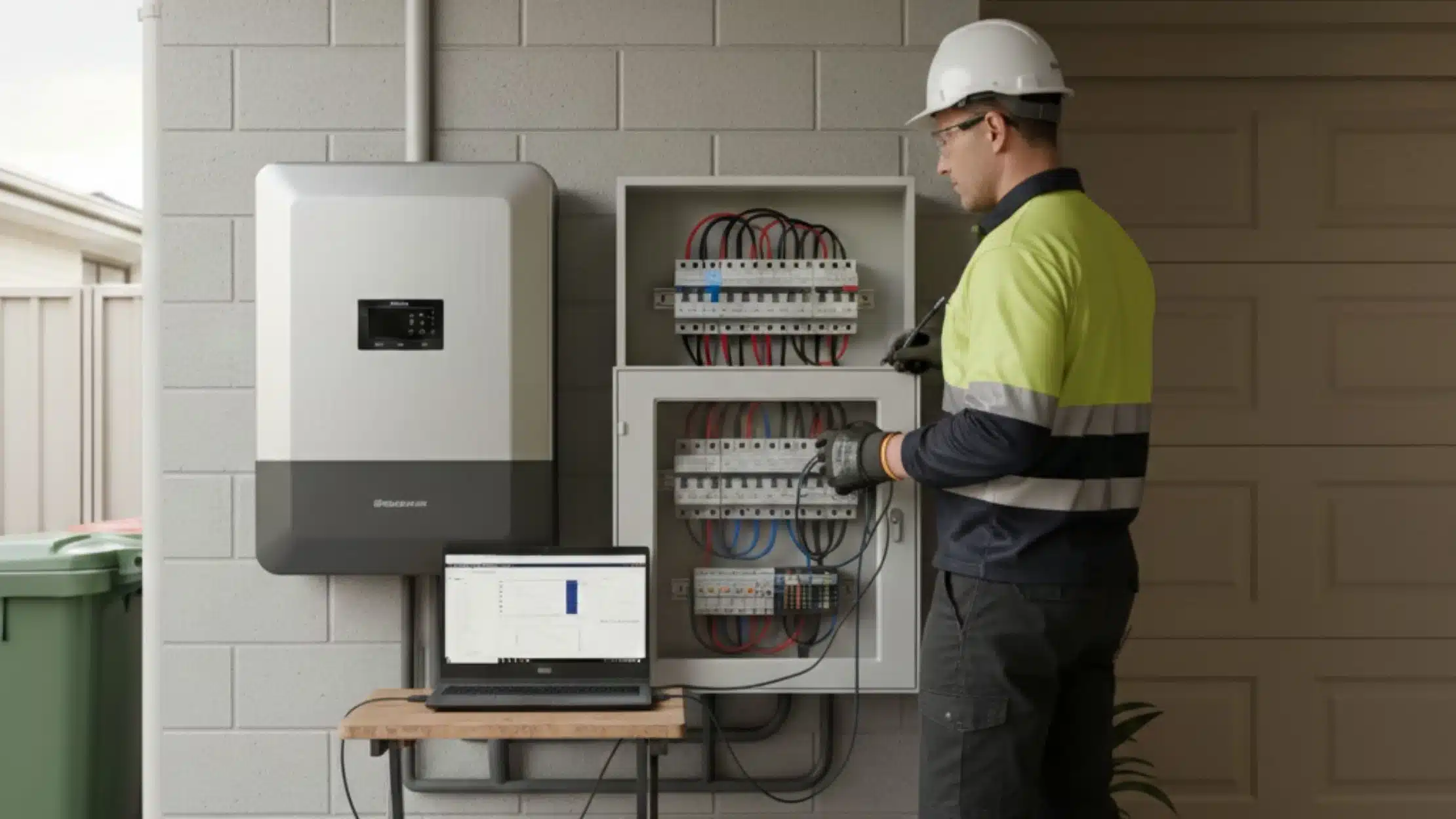
Solar power is now part of life for all of Canberra. From the brand new suburbs of the Molonglo Valley to the well-established homes of Woden, Belconnen and Tuggeranong, there are now plenty of rooftop systems on the ACT homes.
But while the solar panels are understood by most homeowners, not as many understand the equipment that allows solar panels to be used inside the home, the inverter.
If you are doing your research on the question of solar inverter service Canberra homeowners rely on especially, or attempting to get your subconscious working on whether your system requires attention, then this guide takes everything and clear doubt from its meaning into simple English.

We will cover:
- How a solar inverter actually works
- Problems that are common to ACT homes
- Repair or replace inverter
- Why licensed electricians are important
- Electrical upgrade that needs to be done for modern solar house
- How solar, batteries and wiring work together
- What to look for in a Canberra Based Provider
This guide is prepared specifically for ACT homeowners with grid-connected systems.
What Does a Solar Inverter Do In A Home Solar System?
Most people are under the impression that solar panels are used to power their house directly. They do not.
Panels are an electrical device that produces electricity but not in a useful form for use in household appliances. That is where the inverter comes into play a crucial role here.
Without having a proper one, your solar system would be rendered powerless to power your home.
Role of Inverter in the Energy Conversion
Solar panels convert electricity produced and directly call it direct current, or DC, electricity.
Homes in Canberra use electricity in alternating current (AC). The two are not compatible.
The inverter:
- Converts DC electricity to AC Electricity
- Controls voltage and frequency
- Monitors performance of the system
- Shuts down in a safe way (in case faults are detected)
If you put it simply it is the translator between your roof and your switchboard.
When homeowners look for solar inverter repair, it is most commonly due to the fact that that conversion process has ceased functioning as required.
How Inverters work with Solar Panels & Batteries
In a conventional grid-connected system, the process is as follows:
- Solar panels are used to produce DC electricity
- The inverter converts it to AC
- No electric power flows to your switchboard
- Your home uses what it needs
- Whenever electricity is produced in excess, it goes into the state’s grid
If you have a battery or are considering getting one, the inverter may also:
- Storing excess energy by storing it directly in energy
- Draw stored energy at night
- Control the import and export over the grid
The inverter is taken as the control centre of the whole system.
This is a full guide to solar panels and solar solutions in Canberra As this is such a big deal to most people, it might seem odd that inverters play into the design of the overall system.
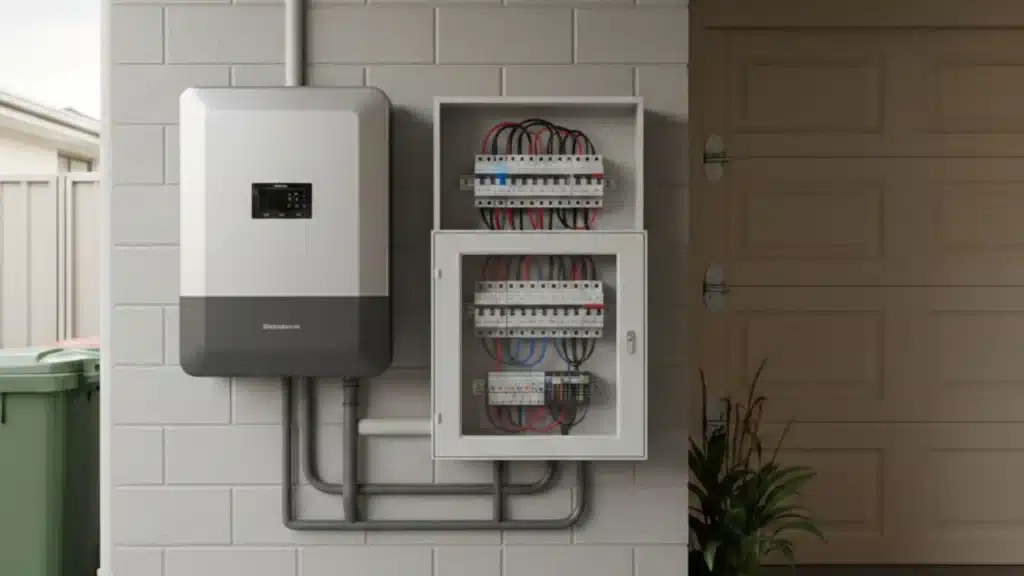
String Inverters vs Hybrid Inverters
Most of the ACT homes are built using one of two common types:
String Inverters
- The panels being connected together in “strings”
- Cost-effective
- Suited for roofs having regular sunlight
Hybrid Inverters
- Designed to be complied with batteries
- Allow upgrading of battery in future
- Manage solar, storage and grid in conjunction with one another
Hybrid systems are getting much attention in Canberra because of growing interest in energy independence.
Common Solar Inverter Issues in Canberra Houses
The climate in Canberra is one that produces certain conditions affecting the solar equipment.
The ACT experiences:
- Cold winters with frost
- Hot, dry summers
- Large day night temperature fluctuations
- Dust during dry periods
These factors have affected the operation of inverters over time.
Fault Codes and Warning Lights
Modern inverters have display screens or have apps canceling alerts.
Common issues include:
- Grid voltage errors
- Isolation faults
- Communication errors
- Over-temperature warnings
Many homeowners ignore little warning lights until significant production offences start.
If your system monitoring app is showing reduction of the output during clear sunny days, it may be an indication of solar inverter service Canberra than Canberra technicians offer.
Reduced System Performance
One way to know that something is wrong is often a drop in solar production.
Possible causes include:
- Internal elements of the degradation
- Faulty cooling fans
- Damaged wiring
- Software issues
In Canberra voltage fluctuations in certain suburbs can also shut things down again and again.
Weather Related issues in ACT
- Temperature extremes are important.
- Condensation can occur in inverter units (in older ones) because of cold mornings.
- Hot summer afternoons, especially to units in direct sun can lead to a thermal shutdown.
- Poor installation location is a typical problem in existing systems.
Age-Related Inverter Degradation
At best, the lifespan of most inverters is 8-15 years.
Internal components gradually degrade. Capacitors, cooling systems, as well as power electronics degrade over time.
If your solar panel system is more than a decade old, then inverter replacement will become more cost effective than having to repair it over and over again.
Solar Inverter Repair vs Replacement: Which is the Right Call?
This is one of the most common questions to arise from homeowners.
Should You Repair Your Inverter or Replace This?
The answer depends on a number of factors.
When Inverter Repairs Makes Sense
Repair may be appropriate if:
- The system is under warranty
- The cause of the fault is minor (fan/sensor problem)
- The inverter is less than 7-8 years old
- Replacement parts are easily available
A licensed electrician Canberra residents trust can diagnose whether the issue is isolated or systemic.
Repairs are usually suitable when the core power conversion components remain in working condition..
When Replacement Is the Sensible Option
Replacement may be better if:
- There is an inverter that is more than 10-12 years old
- Major internal components have failed
- Repairs are close to half what a new unit costs
- You plan to add a battery
New inverters are generally far extra efficient as well as suited to huge energy upgrades than the old one..
If you are proposing storage batteries energy, then moving to a hybrid inverter can ensure that duplication of costs in the future is avoided.
Cost Considerations
While the cost differs, there are several things for homeowners to consider with its price:
- Labour costs
- Gender of parts for replacement
- Losses due to Downtime for Solar Production
- Warranty period on new equipment
Short term saving on repairs may not always be equal to long term value.
Age and Warranty of the System
Many inverters have 5-10 year warranties with them.
Before making a decision, verify:
- Warranty expiry date
- Ability of manufacturer support
- Transferability to new owners
If warranty coverage has expired it is often more practical to replace.
Why Solar & Inverter Work Requires A Licensed Electrician
Solar Systems are electrical Systems.
That means that they have to adhere to Australian Safety Standards and ACT regulations.
Electrical Safety Situations in Act
In the ACT:
- Electrician must perform electrical work allowed only by licensed electricians
- TH0010 Score at A grade work for Solar need to adhere to the Clean Energy Council guidelines
- AS/NZS standards must be adhered to
Inadequate electrical repairs to include:
- Fire risks
- Electric shock hazards
- Insurance disputes
The right choice from the qualified electricians Australian homeowners need when it comes to electrical services Canberra is not optional. It is a safety requirement.
Quite Mystifying Britons: Compliance with Australian Standards
The work of solar and inverter shall conform to:
- AS/NZS 3000 (Wiring Rules)
- AS/NZS 4777 Grid connection of energy systems
- ACT benefits inspection requirements
Licensed electricians check that all isolation switches, earthing systems and switchboard connections are up to date.
Risks associated with Unlicensed Electric Repairs
No license to be ridden, with results:
- Voided insurance claims
- Warranty cancellation
- Failed inspections
- Increased fire risk
DIY attempts to inverter repair is dangerous because of a high voltage DC wiring.
Business Implications of Liability and Contracts
Most insurers require:
- Work completed by trades persons with a licence
- Compliance certificates
- Proper documentation
Failure to satisfy these requirements can make future claims complicated.
Electrical Services Needed By The Canberra Solar Homes
Solar homes more often than not require more than simply the installation of panels.
Electrical infrastructure needs to be able to operate safely.
Switchboard Upgrades
Many of the houses in Canberra, especially in suburbs built in the 1970s and 1980s, are still connected with out-of-date switchboards.
Upgrades may include:
- Replacing fused ceramics by circuit breakers
- Fitting safety switches (RCDs)
- Adding main dedicated solar switches
Without having a compliant switchboard safe inverter installation is not possible.
Safety Inspection and Testing
Routine inspection may include:
- Checking DC isolators
- Testing earthing systems
- Inspecting cabling
- Verifying the functions System Shutdown
Electrical services Canberra professionals offer should be fully compliant with a proper test.
Electrical Upgrades are made Electricity Ready for Battery Ready Homes
Battery-ready homes may involve:
- Additional Amount of Circuit Capacity
- Meter board modifications
- Ability of battery to isolate their dedicated
- Load balancing adjustments
Planning ahead eliminates costly retrofits later.
How Solar, Batteries, and Electrical Systems Are Connected Together
Today’s solar homes function as a united energy system.
Each component has an effect on the other.
Integration Combinations Between Solar Panels, Inverters and Batteries
In a well-designed system:
- Panels generate electricity
- The converter and its control of the flow of energy is performed by the inverter
- The battery stores surplus
- The switchboard applies the safe distribution of power
Poor integration causes inefficiency and faults.
When thinking of upgrades, it is necessary to look at a whole electrical layout, not only at an individual component.
Planning Systems for Future Upgrades
Homeowners usually first try solar with some batteries later in the mix.
Forward planning can consist of:
- Choosing Hybrid Obviously, hybrid-compatible inverters are the way to go
- Providing adequate switchboard space
- Installing clear rated cabling
Upgrading electrical systems in advance ensures double labour bills later on.
But why is electrical design important for the long term?
Incorrect cable sizing or faulty placement results can:
- Reduce system efficiency
- Increase heat build-up
- Cause voltage drop issues
Qualified electrician Canberra homeowners should consider long term expansion from the beginning.
Choosing the Perfect Electrical & Solar Service Dealer in Canberra
All providers don’t have all offerings as equally experienced and knowledgeable.
Choosing the proper Professional Averted your Investment.
Licensing, Accreditation and Experience
Look for:
- ACT electrical licence
- Solar accreditation
- Experience dealing with Grid-Connected
- The effect of knowing the local inspection requirements
Experience is important when setting up the inverter problem, especially intermittent faults.
Local Knowledge Advantages
Canberra has unique factors:
- Cold winter mornings
- High UV exposure
- Voltage flitting around in some areas
- Specific a.c.t.compliance process
A team experienced with and familiar with these nuances is a locally experienced team.
Questions Homeowners Should Ask Before Booking Repairs
Consider asking:
- Is the technician licensed (ACT) Licensed?
- Don’t you offer compliance certificates?
- Will you evaluate the switchboard during the visit?
- What is the warranty for repair work/inverter replacement work?
Answers help in reducing the surprises later on.
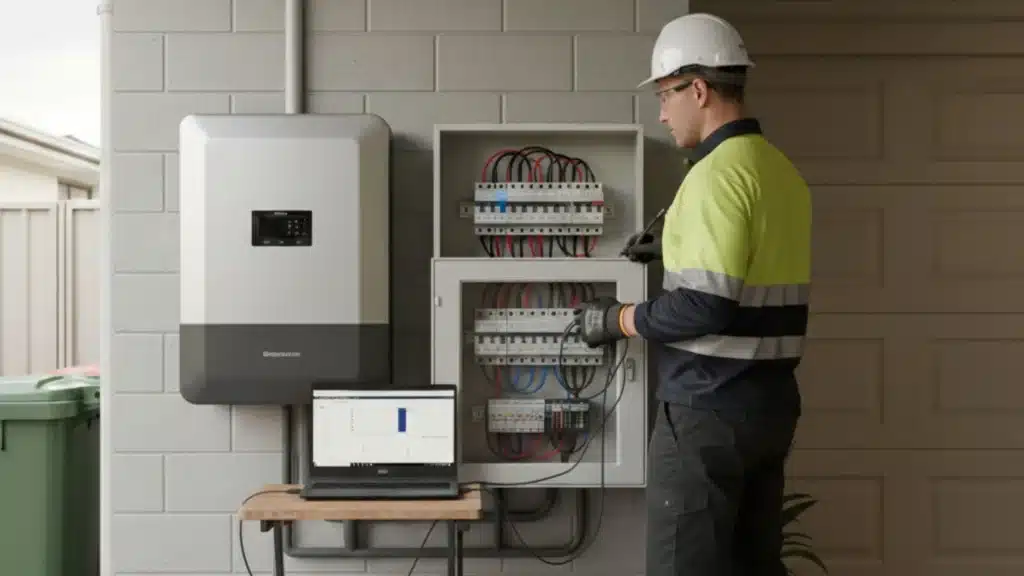
Preventative Maintenance to Solar & Electrical Systems
Solar systems are frequently known as “set and forget”.
The fact is that occasional checks are better for longevity.
Early Warning signs for Inverter problems
Watch for:
- Frequent system shutdowns
- Abnormal noise coming from the inverter
- Sudden production drops
- Errors in monitoring applications
Often the bigger failures are prevented through early intervention.
When to Arrange Inspections
Consider inspections:
- Every 2-3 years
- After severe storms
- When adding new appliances
- Before installing a battery
Regular electrical services Canberra homeowners schedule can have a longer life expectancy of equipment.
What Can Be Taken Away From the Homeowners of the ACT
- Solar Inverters transform the electricity from solar panels into home usable power.
- The climate of Canberra can affect the life of an inverter.
- Minor faults may warrant repair particularly under warranty.
- A lot of times older systems can benefit from inverter replacement.
- The licensed electricians get those compliance and safety ensured.
- The Second one, Switchboard upgrade is common in older ACT homes.
- The planning of the battery should consist of inverter and electrical capacity monitoring.
- The preventative inspection approach cuts the long term risk.
Solar systems represent important investments.
A way to protect them is professional oversight and enlightened decision-making.
Frequently Asked Questions
1. How much do solar inverters last in Canberra houses?
Most of the inverters have a lifespan of 8-15 years which is depending upon the installation quality and environmental exposure. Canberra’s cold winters and hot summers can cause worn out components in fugally positioned units. Regular inspection and proper ventilation help it to extend its life. Monitoring the performance via system apps can also serve as a way to get early warning signs about the degradation of the system.
2. Is It Better To Repair or Replace A Faulty Inverter?
This depends on the age of the system, warranty cover, and the type and nature of the fault. Minor problems in newer units can tend to be correctable. However, if the inverter is more than 10 years old, or has significant internal failures, it may be better to replace an inverter as a part of bigger long-term cost drill and efficiency if, in the future, battery upgrades are due.
3. Do I need a licensed electrician for solar inverters repair?
Yes. When it comes to the ACT, electric work has to be done by professionals who have licenses to do so. Solar inverters work with DC and AC soaring uninhibited electricity. Unlicensed repairs present serious dangers as well as potentially voiding insurances / warranties. Always make sure you have the proper licensed help with compliance documentation.
4. What electrical updates are required for battery-ready homes?
Battery ready homes may need some changes in the switchboards, extra circuit protection and specific isolators. Older Canberra properties are often due for some sort of capacity upgrade before storage can be added safely to them. When facilities take steps to plan for these upgrades in terms of initial solar installation, future costs can be reduced and integration made much easier when batteries are added later.
5. How often should you check your solar electrical systems?
Getting a professional to inspect them every two to three years is a good idea. It’s also smart to do this after big storms or if you notice the system isn’t working like it used to. These regular inspections help keep the wiring in good shape, make sure safety switches work properly, and verify that the inverter meets Australian Standards and ACT regulations.
In Canberra, solar energy has become part of daily life. Knowing how your inverter and electrical systems operate together helps keep your investment safe, efficient, and ready for the future.
Contact Us
If your solar panel system isn’t performing the way it should, or you’re unsure whether your inverter or switchboard is up to standard, it’s worth getting it checked properly.Woden Valley Solar and Electrical works with Canberra homeowners to keep solar systems safe, compliant and running efficiently. Whether you need advice, repairs, or an upgrade, speak with a local licensed electrician who understands ACT homes and conditions.