


Solar panels can generate clean electricity for your Canberra home, but installing a system is only part of the journey. Once your solar system is running, you also need to know whether it is performing as expected.
That is where Solar System Monitoring Canberra becomes useful.
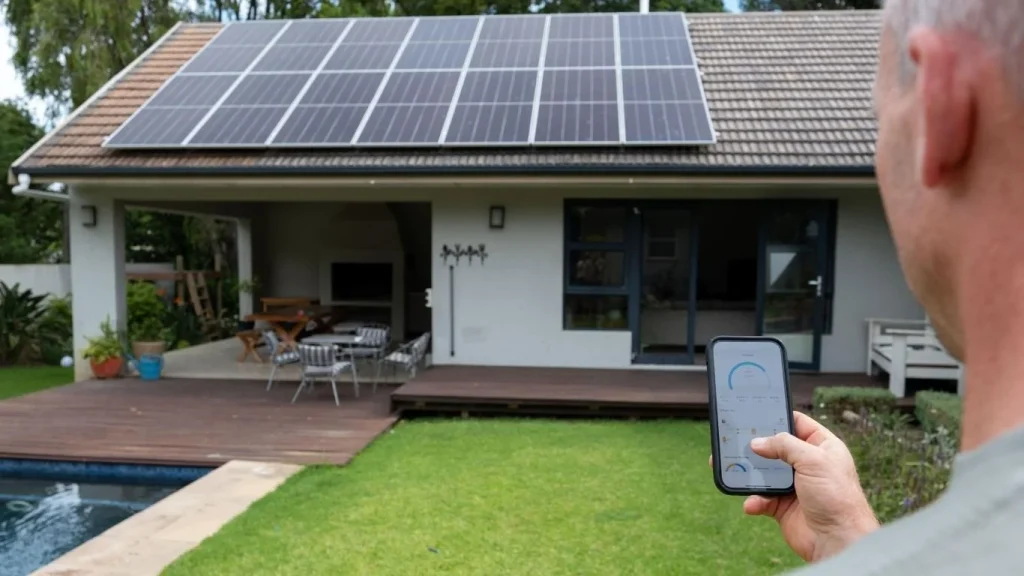
Solar monitoring allows homeowners to track solar generation, household electricity consumption, grid imports and, where supported, battery activity. Depending on the equipment installed, monitoring may be available through an inverter display, smartphone app, web portal or separate energy monitoring device.
For Canberra homeowners, this information can make it much easier to understand how a solar system behaves across sunny summer days, cold winter mornings, cloudy periods and changing household energy use.
The ACT Government also recommends regularly checking whether a solar system is producing as much power as expected and comparing generation across different weather and seasonal conditions.
This guide explains how solar monitoring works, what homeowners should track, which alerts matter and when a change in performance may require professional attention.
Why Solar System Monitoring Matters
A solar system can keep functioning even if it does not generate as much power as it is designed to do. A homeowner might not realize there is a problem at first if they don’t monitor it.
For instance, if an inverter failure, communication failure, unexpected shading or equipment failure occurs, the production of solar power could be curtailed. If it is not monitored regularly, the issue could only be noticed at the time of the electricity bill.
Monitoring provides a clearer picture.
Knowing that solar panels are installed, one can observe how much electricity the system is producing and what changes are occurring in its production.
Monitoring should thus be seen as a component of the whole system instead of an optional add-on for homeowners considering Solar Canberra solutions.
A successful monitoring system can aid you to:
- Monitor solar generation on a daily basis
- Contrast production from different seasons
- Recognise sudden reductions in production
- Record the electricity usage in your home.
- Know the amount of solar energy consumed at home
- Monitor electricity sent to the power grid.
- Where applicable, keep an eye on the battery charging and discharging process.
- Get system or inverter warning messages
- Get potential faults or issues identified earlier on.
- Become more efficient in using appliances
The objective isn’t to stand and watch the application at all times. It’s about knowing how things should be and identifying when they are different.
How Solar Monitoring Works
Typically, the information for Solar Monitoring comes from the inverter, and in some systems, from extra energy meters.
The inverter transforms the direct current (DC) electricity generated by the photovoltaic solar panels to alternating current (AC) electricity that is used in your home. Some modern inverters also can provide performance data to an on-line monitoring platform.
This information can then be obtained by the homeowner through:
- A mobile application
- A website that provides monitoring.
- An inverter display
- A smart meter
- An energy monitoring device designed for the specific purpose
A few systems will only display solar generation. Advanced systems can display generation, consumption, grid imports and exports as well as battery activity.
The ACT has also recognised the value of energy monitoring and management systems. According to the government’s material, these energy monitoring systems can display and record household energy use in real or near real time and can share information via a mobile app or a website.
Such information is especially beneficial when there are a number of large electrical loads in a home.
For instance, in a Canberra home, solar, battery, reverse cycle heater/cooler, electric hot-water and EV charging might all be installed. Monitoring can be used to help identify when those loads are consuming the greatest amount of electricity.
What Should Canberra Homeowners Monitor?
Not all the numbers in a solar application are of equal value.
These are the main KPIs that homeowners need to focus on.
Daily Solar Generation
Daily generation will give an idea of the amount of electricity generated by the solar system on a specific day.
Generally a sunny summer day will yield more energy than a very overcast winter day, but this will depend on system size, panel orientation, shading, temperature, and other factors.
Don’t look at one day in a system as being atypical.
Or search for patterns that can be seen over time, e.g., days or weeks.
Household Energy Consumption
As significant as learning how much electricity your panels generate is, is knowing how much electricity your home consumes!
Even though you are using more electricity, the system may be operating normally due to increased heating/cooling, appliances, hot water or other loads.
Consumption monitoring enables the identification of a solar production problem rather than a household energy-use problem.
Grid Import and Export
The monitoring platform can display the amount of electricity consumed from the grid and the amount of surplus solar electricity that is being fed back into the grid.
This can help you to be aware when your home is using solar electricity and when it needs more electricity from the grid.
If a household is using more electric power during the daylight, the amount purchased from the grid may be less. The ACT Government suggests that suitable energy use be optimised to shift into daylight time periods when the solar generation resource is available.
Battery Performance
Monitoring is particularly useful if your Canberra house has a solar battery.
You can see the following:
- Battery SoC
- Charging periods
- Discharging periods
- The amount of energy provided by the battery.The energy provided by the battery.
- If available, grid charging:
- Energy delivered to the battery from the Sun.
- Battery faults or warnings.
Such data can be useful for homeowners to know if the battery is being used at the required settings.
Understanding Solar Production in Canberra
Solar generation is not constant all year round.
There are also large seasonal variations and sometimes daily changes in solar output in Canberra.
Strong production potential can be expected on a clear summer day, and lower production on a winter morning due to reduced daylight hours and weather conditions.
Other factors that can affect production include cloud cover, dust, temporary shading and panel temperature.
This is because it is important that homeowners don’t compare a single cold winter day with a clear summer day and assume there is something wrong.
Rather, compare like periods.
If, for instance, you were producing a certain amount of energy on a clear sunny day and suddenly you weren’t producing as much as you used to, that would be worth looking into.
The ACT Government advises checking generation on cloudy days compared to sunny days and winter days compared to summer days to enable homeowners to gain a greater understanding of the generation capability of their system under varying conditions.
Solar Monitoring Alerts: Which Ones Matter?
The primary benefit of connected monitoring is that it delivers alerts.
Not all notifications imply that there is something big wrong, but some shouldn’t be ignored.
Inverter Fault Alerts
An inverter fault notification may mean that the inverter has detected an operating fault.
The system can either run at reduced capacity or cease to generate electricity, depending on the fault.
If an alert is still on, inspect the inverter display or monitoring app and follow the manufacturer’s instructions.
Never attempt to make electrical repairs.
Communication Alerts
A monitoring application can indicate that the inverter is offline.
This does not necessarily indicate that the solar panels are not producing electricity.
The issue could be related to the internet connection, Wi-Fi, monitoring device or communication platform.
Make sure that your home internet connection is functioning. If the monitoring system is offline and the inverter is normal, there may be a need to investigate further.
Low Production Alerts
There are monitoring platforms that will alert a homeowner if production is below an expected level.
These alerts can be helpful as they can alert to a problem before it becomes apparent on an electricity bill.
Weather conditions should always be taken into account, however.
There is a difference between a low production day in cloudy weather, and a low production day in clear weather.
Battery Alerts
Battery systems can issue warnings on temperature, communication, charging, discharging and/or operating conditions.
When an alert is issued, always follow the battery manufacturer’s instructions.
If a warning persists or the system fails to operate normally, call a qualified installer or electrician, do not attempt to troubleshoot electrical equipment yourself.
Signs Your Solar System May Need Attention
It is useful when you are aware of what unusual behaviour is.
Some indicators are:
- Solar production precipitously declines for no apparent weather cause
- The inverter keeps on reporting a fault.
- The monitoring app constantly keeps reporting the system as being offline.
- Production is very low for several clear days.
- The system seems to be not reporting in one part of the system.
- The performance of the battery varies greatly
- Unexpectedly high-household grid imports of electricity.
- The system stops generating altogether
- When the alarm is repeated, it shows up in the monitoring application.
If only one unusual reading, this does not necessarily indicate a fault.
The key is that the change is persistent or inexplicable.
Solar Panel Performance vs Solar System Performance
It is also important to understand that your panels are only one part of the system.
A solar installation typically includes panels, an inverter, mounting equipment, cabling, protection equipment and other electrical components.
A monitoring problem may therefore not be caused by the panels themselves.
For example, if an inverter loses communication with its monitoring platform, the app may stop displaying information even though the panels are still producing electricity.
Similarly, reduced generation may be caused by shading, soiling, equipment faults or other system conditions.
This is why monitoring data should be treated as a diagnostic aid rather than proof of a particular fault.
A qualified professional can assess the system when the available data suggests something is not operating correctly.
Monitoring Solar Panels After Installation
Monitoring should begin as soon as your solar installation Canberra project is complete.
During handover, homeowners should know:
- Which monitoring app or platform is being used
- How to access their account
- What the normal system status looks like
- Where the inverter is located
- How to read basic generation information
- What common alerts mean
- Who to contact if the system stops operating
- What warranties apply to the equipment
Keep your installation documentation and equipment manuals in an accessible location.
This can be particularly helpful if the system develops an issue several years after installation.
The ACT Government recommends checking inverter indicator lights and regularly checking whether the system is producing as much power as expected.
Monitoring Solar During Canberra’s Seasons
One of the best habits to develop for monitoring is to check your solar performance throughout the year.
Summer
Extended daylight can offer more daylight hours during which solar generation can occur.
Household electricity use can also rise because of the use of air conditioning. You can use monitoring to find out if any of this demand is being met by daytime solar generation.
Autumn
As daylight hours change, production patterns will gradually change as well.
It’s a good time to make comparisons with past seasonal data.
Winter
The colder temperatures in Canberra can lead to higher electricity consumption for heating.
Factors such as shorter days and weather conditions may also make solar production less. Homeowners can use monitoring to determine when there is a higher demand in their home or when solar generation is lower.
Spring
Extended daylight hours can boost solar production once again.
Spring is also the time when any trees or new shading conditions on panels can be checked.
Shading and Solar Monitoring
A shade is an important factor in Canberra house design.
Trees may grow over time and seasonal shading may occur due to nearby structures that were not considered at the time of installation.
The ACT Government points out that if a small percentage of shade is cast over any one panel, the power output from the system will be diminished.
If your monitoring data indicates that production is slowly decreasing, you should check to see if the environment around your site has changed.
Don’t assume that all production reductions are due to machine issues.
The professional inspection can assist in establishing if shading, condition of the panels, operation of the inverter or something else is the reason.
Monitoring and Solar Maintenance
Monitoring is not a substitute for physical maintenance.
An app can let you know that production has changed, but it can’t necessarily tell you why.
Solar panels can accumulate dirt and other debris. Equipment may need periodic inspection as well.
The ACT Government advises installing and maintaining solar energy systems in a clean state when needed and to ensure they continue to operate safely and efficiently by having an accredited installer carry out a review.
Monitoring and maintenance are thus interdependent.
Suspicious activity is detected through monitoring.
Professional servicing will assist in investigating and fixing the root cause.
Is Solar Monitoring Worth It for Canberra Homes?
For most homeowners, monitoring provides useful visibility into an investment that is expected to operate for many years.
The biggest benefit is not simply seeing a daily production number.
It is understanding how your home uses electricity and recognising changes in system performance.
This becomes even more valuable for homes with:
- Larger solar systems
- Solar batteries
- High electricity consumption
- Electric heating and cooling
- Electric hot water
- EV charging
- Multiple major appliances
A monitoring platform can help homeowners make better use of available solar generation and identify unusual system behaviour earlier.
Choosing a Solar Monitoring System
When choosing a monitoring option, don’t just consider whether an app exists.
Consider whether the system provides:
- Information that is real-time or near real-time.
- Historical production data
- Household consumption data
- Information for the grid import and export.
- Battery monitoring
- System alerts
- Fault notifications
- Mobile access
- Web-based access
- Easy-to-understand reporting
Compatibility is also a factor!
The monitoring equipment should function properly with the inverter, battery and electrical system that are installed at the property.
If you are having a new solar installation Canberra, inquire from the solar installer what monitoring exactly they will be providing before the installation is finished.
When to Contact a Solar Professional
Monitoring information can be safely accessed by homeowners, but electrical faults should be addressed by suitable qualified professionals.
Call your installer or qualified electrician if:
- There is a fault still active
- The inverter is repeatedly turning off.
- Solar production remains abnormally low.
- The system ceases to produce:
- Repeated electric warnings
- Battery alerts continue
- You think you may have an equipment problem
- Monitoring data shows that there is a large unexplained change.
Avoid opening an inverter, removing electrical covers and/or making electrical repairs from information displayed in an app.
The electrical requirements are applicable to ACT solar installations and Access Canberra advice verifies that solar equipment must be installed and maintained in accordance with applicable requirements and standards.
A Simple Solar Monitoring Routine for Homeowners
It is not necessary to monitor your solar app on an hourly basis.
Typically, a straightforward procedure is sufficient.
Test to see if the system is on-line and generating power once or twice a week.
Check your generation and household consumption once a month.
Review and compare performance with prior periods every few months, and take seasonality into account.
If you see a substantial difference that isn’t explained by the monitoring data, look into what’s going on before deciding the panels have failed.
This way you have a helpful building record of your home’s performance.
That history can make unusual changes much easier to be recognized over time.
Final thoughts on Solar System monitoring Canberra
Solar System Monitoring Canberra is a helpful tool for homeowners to gain insight into what’s going on with their electricity bills.
You don’t just know they have solar panels, but you can see how much electricity they are generating, how much electricity your home is using, and that they are working properly.
Solar performance can be affected by the season, shading, heating and cooling requirements for Canberra homes. Monitoring helps to put the changes in perspective.
The easiest strategy is to simply know what your normal production is, as well as to monitor your system regularly, and when you see persistent alerts, to make arrangements for professional assistance when something doesn’t look right.
With the right installation, maintenance and sensible energy use, solar monitoring can provide valuable information and confidence to the Canberra homeowner’s solar investment.
Considering solar energy for your Canberra home? Consult a local solar expert about system design, monitoring and the best system for your home.
Get professional advice on solar monitoring, system performance and ongoing solar maintenance for your Canberra home.
Phone: +61431 262 728
Email: info@wodenvalley.com.au
Website: https://wodenvalleysolarnelectrical.com.au/
Location: Unit 5/5 Tooth St Mitchell ACT 2911