


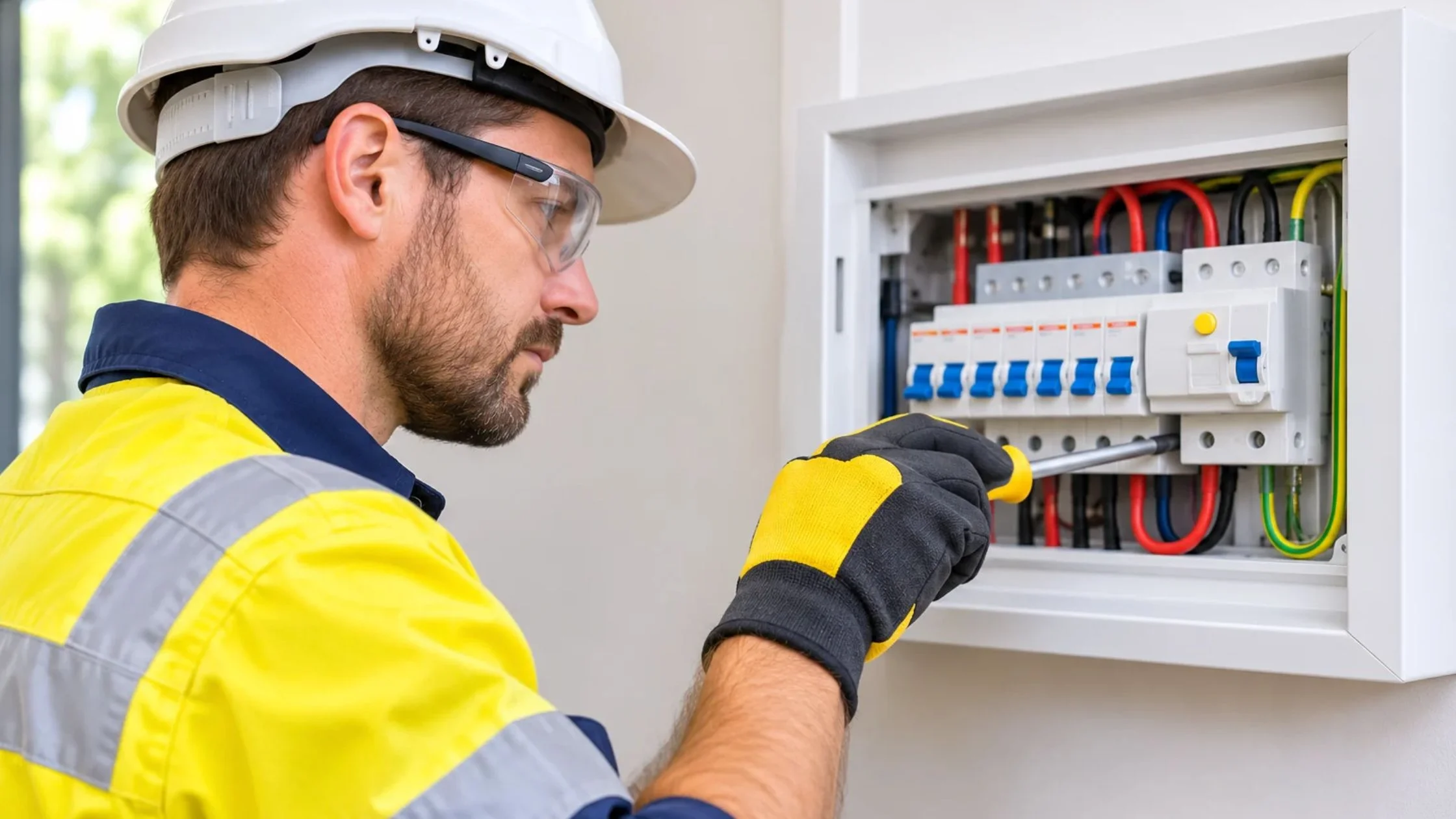
Electrical safety is essential in every home. From kitchen appliances and lighting to air conditioning and power outlets, electricity supports almost every part of modern living. However, damaged wiring, faulty appliances and electrical leakage can create serious risks for homeowners and their families.
One important way to improve household electrical safety is by installing safety switches, also known as Residual Current Devices (RCDs). These devices monitor the flow of electricity and disconnect power when they detect a current imbalance that could indicate an electrical fault.
Safety switch installation in Canberra can help reduce the risk of electric shock and improve protection throughout your property. At Woden Valley Solar & Electrical, we understand the importance of safe and reliable electrical systems. This guide explains how safety switches work, when installation or replacement may be needed and why regular testing matters. If you are planning wider work, our complete guide to residential electrical upgrades in Canberra is a good place to continue.

⚡ In this guide
- What is a safety switch?
- Why safety switches matter in Canberra homes
- How an RCD works
- Signs you may need installation
- Where safety switches should be installed
- Types of safety switches
- Benefits of professional installation
- Why regular testing is important
- Professional safety switch testing
- When to replace a safety switch
- Why safety switches trip
- Safety switches and switchboard upgrades
- Choosing a safety switch electrician
- Renovations and new appliances
- Home electrical safety checklist
What Is a Safety Switch?
A safety switch is an electrical protection device designed to reduce the risk of electric shock. It monitors the current flowing through a circuit and detects differences between the active and neutral conductors. If it detects current leaking from the intended path, it can quickly disconnect the supply.
For example, a damaged appliance or faulty cable may allow electricity to flow through an unintended path. A correctly installed and working RCD can detect certain leakage faults and switch off the affected circuit. Safety switches are commonly installed in residential switchboards and can protect selected circuits or groups of circuits.
1. Why Are Safety Switches Important for Canberra Homes?
Canberra households use a wide range of electrical appliances throughout the year. Heating systems, air conditioners, kitchen equipment, washing machines and outdoor devices all rely on safe electrical installations. A fault in an appliance, cable or connection can create a risk of electric shock.
Safety switches add a layer of protection by monitoring current and disconnecting power when certain faults occur. They are particularly important where electrical equipment may meet moisture, such as bathrooms, laundries, kitchens and outdoor spaces. Suitable RCD protection helps reduce the potential consequences of electrical leakage.
2. How Does an RCD Safety Switch Work?
An RCD continuously monitors the current flowing through a circuit. Under normal conditions, the current travelling through the active conductor returns through the neutral conductor. When some current escapes this path, an imbalance occurs. The safety switch detects the difference and disconnects the supply when the imbalance reaches its operating threshold. This helps reduce how long someone is exposed to an electric shock.
A safety switch works differently from a standard circuit breaker:
- 🛡️ Safety switch (RCD): Detects current leakage and protects against certain electric shock risks.
- 🔌 Circuit breaker: Protects wiring against excessive current caused by overloads and short circuits.
Both devices perform important but different jobs. A suitable residential installation needs the right combination of protective devices.
3. Signs Your Home May Need Safety Switch Installation
Older properties may have limited RCD protection or outdated switchboard arrangements. If you are unsure about your home’s electrical safety, arrange an inspection with a licensed electrician. These signs suggest an assessment may be needed:
No Visible Safety Switches
If your switchboard contains only older fuses or circuit breakers, it may not have suitable RCD protection. A professional inspection can confirm which circuits have safety switches and whether more protection is required.
Outdated Electrical Switchboard
Older switchboards may have limited space, outdated components and no modern protective devices. A switchboard assessment can identify whether improvements are needed to support suitable safety switches.
Frequent Electrical Faults
Repeated tripping, unexplained power interruptions or appliance problems may indicate an underlying fault. These issues should be investigated rather than treated as normal household annoyances.
Recent Renovations or New Appliances
Kitchen renovations, new air conditioning, extra power points and other upgrades can change your home’s electrical requirements. An electrician can check whether the existing RCD protection suits the modified installation.
4. Where Should Safety Switches Be Installed?
Safety switches are installed within the switchboard and protect the circuits they are designed to monitor. The required arrangement depends on the property’s installation and applicable Australian requirements. Residential circuits that may need RCD protection include:
- General power point circuits
- Lighting circuits
- Kitchen electrical circuits
- Bathroom and laundry circuits
- Outdoor power circuits
- Circuits supplying other household equipment
Having one safety switch does not automatically mean every circuit is protected. An electrician should identify which circuits have RCD protection and decide whether extra devices are required.
5. Types of Safety Switches Used in Residential Properties
Different RCD types detect different forms of residual current. Choosing the correct device matters, particularly in homes with modern electronic appliances.

- 🔵 Type AC RCD: Detects sinusoidal alternating residual currents. Suitability depends on the connected equipment and installation requirements.
- 🔵 Type A RCD: Detects alternating residual currents and certain pulsating direct current faults. Commonly considered for modern household circuits with electronic equipment.
- 🔵 Type F and Type B RCDs: Offer extra detection capabilities for certain equipment and residual current waveforms. They may be required for particular applications, depending on the manufacturer’s instructions and electrical design.
A qualified electrician can choose the right RCD type for each application, rather than selecting a device based only on its appearance or rating.
6. Benefits of Professional Safety Switch Installation
- ⚡ Improved protection against electric shock: A safety switch can disconnect power when it detects certain leakage faults.
- 🏠 Better household electrical safety: RCD protection works alongside circuit breakers, earthing and correctly installed wiring.
- 🔌 Protection across relevant circuits: A properly designed switchboard can protect the required circuits throughout the home.
- 💡 Support for modern equipment: An electrician can assess whether your protective devices suit appliances with electronic components, heating elements and complex controls.
- 🙌 Greater confidence: Knowing your installation has been inspected and suitable protection is in place brings peace of mind.
7. Why Is Regular Safety Switch Testing Important?
Installing a safety switch is only one part of electrical safety. The device should also be tested to check that its operating mechanism works correctly. Over time, electrical equipment can wear, become damaged or develop faults, and testing helps identify a safety switch that may not operate as expected.

Most residential RCDs have a test button that lets you check the device’s operation. Follow the manufacturer’s testing instructions and any guidance from your electrician.
How to Test a Safety Switch
- Read the manufacturer’s instructions before testing.
- Identify the correct safety switch in your switchboard.
- Make sure connected equipment can safely lose power.
- Press the test button on the device.
- Check that the switch trips and disconnects the circuit.
- Reset the device according to the manufacturer’s instructions.
8. What Happens During Professional Safety Switch Testing?
Professional testing involves more than pressing the test button. A qualified electrician uses suitable test equipment to assess the RCD’s operation and verify that it performs within the required operating limits. Depending on the installation, an inspection may include:
- Checking the physical condition of the switchboard
- Identifying circuits protected by each RCD
- Checking the device type and rating
- Testing RCD operating time and trip characteristics
- Inspecting relevant wiring and connections
- Checking associated electrical protection
- Identifying damaged or unsuitable components
Professional testing shows whether the safety switch is operating correctly and whether the wider installation needs attention.
9. When Do You Need Safety Switch Replacement?
Like other electrical components, safety switches can become damaged or develop faults over time. Replacement may be necessary if:
- The device fails its required testing
- The test button does not operate correctly
- The switch has visible physical damage
- The device repeatedly trips without an obvious explanation
- The existing RCD is unsuitable for the connected equipment
- An electrical inspection identifies a problem
However, repeated tripping does not automatically mean the safety switch is faulty. The cause could be a damaged appliance, moisture, deteriorated wiring or another electrical problem. Safety switch replacement in Canberra should always begin with identifying the underlying issue, because replacing the device without investigating may leave the original fault unresolved.
10. Common Reasons Why Safety Switches Trip
A safety switch trips when it detects an imbalance that reaches its operating threshold. Several household issues can cause this:
- 🔧 Faulty appliances: A damaged washing machine, refrigerator, kettle or other appliance may develop a leakage fault. You can read more about appliance safety on the Product Safety Australia website.
- ⚡ Damaged wiring: Worn insulation, loose connections and damaged cables can let electricity escape the intended circuit. See our guide to home rewiring in Canberra for the warning signs.
- 💧 Moisture and water exposure: Water entering electrical equipment, outdoor outlets or damaged fittings can create a leakage path.
- 🔄 Multiple faults: Several appliances or components may contribute to leakage on the same protected circuit.
If your safety switch trips repeatedly, unplugging appliances may help an electrician investigate, provided it is safe to do so. Do not touch damaged equipment or exposed wiring.
11. Safety Switches and Switchboard Upgrades
Sometimes, installing extra RCD protection needs improvements to the existing switchboard. Older switchboards may have limited space or outdated components that are not suitable for new protective devices. A switchboard upgrade may involve a modern enclosure, suitable circuit breakers, RCDs and clearly labelled circuits. To understand the warning signs and what the work includes, read our guide to switchboard upgrades in Canberra.

This can also be a useful time to review your home’s electrical capacity. If you are planning solar panels, battery storage, air conditioning or an electric vehicle charger, discuss these requirements during the inspection. The electrician can assess whether your installation needs further improvements before new equipment is connected.
12. Choosing a Safety Switch Electrician in Canberra
Electrical safety work requires the right knowledge, equipment and licensing. You can check licensing requirements and find consumer information through Access Canberra, the ACT’s regulator. When choosing a safety switch electrician in Canberra, consider these points:
- ✅ Check licensing: Confirm the electrician holds the appropriate ACT electrical licence.
- ✅ Ask about RCD experience: Look for experience with residential safety switch installation, testing and replacement.
- ✅ Request a proper inspection: The electrician should assess your switchboard and identify which circuits need protection.
- ✅ Discuss the equipment: Ask about the proposed RCD type, ratings and suitability for your installation.
- ✅ Confirm testing and documentation: Find out what testing will be completed and what electrical safety documentation you will receive.
A reliable electrician should explain the work clearly and recommend improvements based on your property’s actual requirements.
13. Safety Switch Installation for Renovations and New Appliances
Renovations are an ideal time to review your home’s electrical protection. If you are updating a kitchen, adding a bathroom or installing new appliances, your electrician should check the existing RCD arrangements. New circuits may need suitable protective devices, depending on the installation requirements. The same applies when installing air conditioning, solar systems, batteries or EV charging equipment. Planning safety improvements alongside other electrical work helps create a more organised and suitable installation.
14. Home Electrical Safety Checklist
Homeowners can take several simple steps to support electrical safety:
- ✅ Check your switchboard for visible damage
- ✅ Follow the manufacturer’s instructions for safety switch testing
- ✅ Arrange an inspection if an RCD fails its test
- ✅ Avoid using damaged power points and electrical appliances
- ✅ Keep electrical equipment away from water
- ✅ Never overload power boards
- ✅ Investigate repeated circuit trips
- ✅ Arrange professional inspections before major electrical upgrades
- ✅ Keep switchboard labels clear and readable
- ✅ Never attempt DIY electrical wiring or switchboard repairs
These steps can help identify potential problems and encourage safer electricity use around the home.
Conclusion: Make Electrical Safety a Priority
Safety switches are an important part of residential electrical protection. They help detect certain electrical leakage faults and disconnect power to reduce the risk of electric shock.
However, installing an RCD is not enough on its own. The correct device must be selected, installed properly and tested regularly. Damaged wiring, faulty appliances and outdated switchboards should also be addressed. At Woden Valley Solar & Electrical, we understand the importance of reliable electrical safety solutions for Canberra homeowners. If your property needs safety switch installation, testing or replacement, speak with a qualified electrician about the most suitable protection for your home.
Need safety switch installation or testing in Canberra?
Make electrical safety a priority. Contact Woden Valley Solar & Electrical to help protect your home with properly installed and tested safety switches.
Contact Woden Valley Solar & Electrical📞 +61431 262 728 | ✉️ info@wodenvalley.com.au
📍 Unit 5/5 Tooth St, Mitchell ACT