


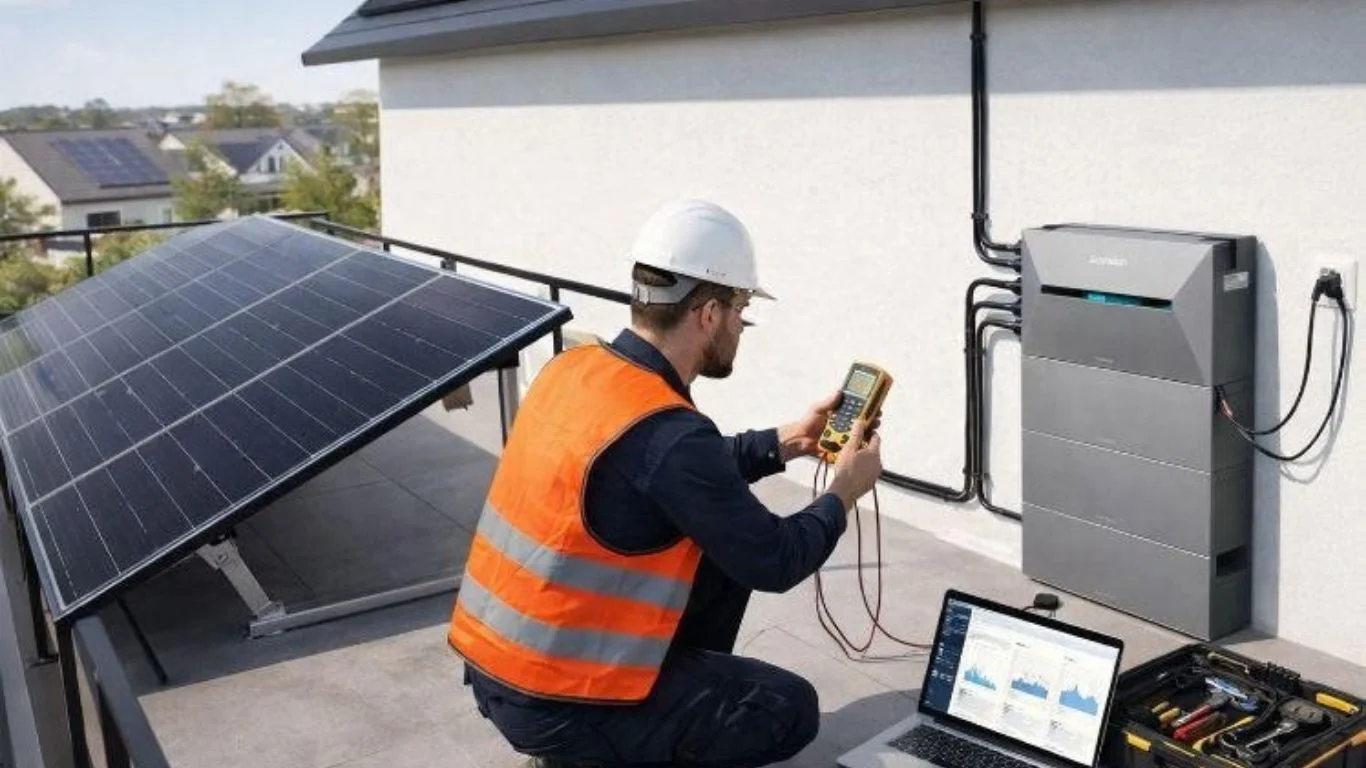
Installing solar panels is a major step towards producing more of your own electricity, but the installation itself is not the end of the process. Once a system is operating, homeowners need a simple way to understand whether it is producing energy as expected.
That is where Solar Panel Performance Monitoring Canberra becomes important.
A monitoring system can show how much electricity your panels are generating, how much energy your household is consuming, how much electricity is being exported to the grid and, where applicable, how a battery is charging and discharging.
For Canberra homeowners, this information is particularly useful because solar production changes throughout the year. Cloud cover, shorter winter days, shading, panel condition, household energy use and inverter performance can all affect the numbers shown in a monitoring app.
The ACT Government recommends that homeowners regularly check whether their solar system is producing as much power as expected and compare performance across sunny and cloudy days and different seasons.
This guide explains how solar panel performance monitoring works, what homeowners should track, how to recognise unusual performance and when professional assistance may be required.
What Is Solar Panel Performance Monitoring?

Solar panel performance monitoring is the process of tracking the electricity generated by a photovoltaic system and reviewing that information over time.
Modern solar systems often provide monitoring through an inverter manufacturer’s mobile application or online portal. Depending on the equipment, homeowners may be able to see information such as:
- Daily solar generation
- Monthly and annual production
- Current power generation
- Household electricity consumption
- Grid electricity imports
- Solar exports
- Battery charging and discharging
- Inverter operating status
- System warnings and fault notifications
The exact information available depends on the inverter, meter, battery and monitoring equipment installed at the property.
The important point is that monitoring turns solar generation into useful information.
Rather than simply looking at the panels on the roof, you can see how the system is performing from inside your home.
Why Monitor Solar Panel Performance?
Solar panels can continue to operate while their output is lower than expected.
A homeowner may not notice a gradual reduction in production until an electricity bill arrives or the difference becomes significant.
Monitoring can provide an earlier indication that something has changed.
For example, a system may experience:
- An inverter fault
- A communications problem
- New shading
- Dirty panels
- Equipment failure
- A tripped protection device
- Unexpectedly high household consumption
- A battery operating differently from expected
Monitoring does not necessarily identify the exact cause of a problem. However, it can show that something deserves closer attention.
This is one reason performance monitoring should be considered alongside good system design, professional installation and ongoing maintenance.
How Does Solar Performance Monitoring Work?
Most grid-connected solar systems use an inverter to convert the electricity produced by the panels into electricity suitable for use in the home.
The inverter can collect operating information and, where supported, transmit that information to a monitoring platform.
A homeowner may then access the information through a smartphone app or web portal.
Some systems also use smart meters or additional energy meters to measure household consumption and electricity flowing to and from the grid.
This creates a more complete picture.
For example, imagine a Canberra home producing 30 kWh of solar electricity during a day. The homeowner may also use 20 kWh during that period.
The monitoring system can help show how much of the generated electricity was used directly in the home and how much was exported.
This distinction is useful because solar generation and household consumption are not necessarily happening at the same time.
What Should Homeowners Track?
You do not need to study every number in a monitoring application.
A few key measurements provide most of the useful information.
Daily Solar Generation
Daily generation tells you how much electricity the system produced during a particular day.
This is one of the easiest numbers to understand, but it should not be viewed in isolation.
A clear summer day and a cloudy winter day will naturally produce different results.
Instead of asking whether one particular number is “good”, look for patterns.
If your system normally produces a certain range of energy on similar clear days and suddenly produces substantially less, further investigation may be appropriate.
Current Solar Output
Some monitoring apps show the system’s current power output in kilowatts.
This number changes throughout the day.
Production normally rises after sunrise, reaches higher levels around the stronger daylight period and then falls towards sunset.
Clouds can cause rapid changes.
Current output is therefore useful for understanding what the system is doing at a particular moment, but historical production is usually more useful when assessing overall performance.
Monthly Production
Monthly production gives you a broader view of system performance.
It can help you compare one month with another and identify seasonal patterns.
For Canberra homeowners, this is important because daylight hours and weather conditions change considerably throughout the year.
A lower winter production figure does not automatically mean that the solar system has developed a fault.
Household Consumption
Solar monitoring becomes even more useful when it also shows household energy consumption.
A home could have perfectly normal solar generation but still receive a higher electricity bill because electricity consumption has increased.
Heating, cooling, hot water, pool equipment, appliances and EV charging can all affect household demand.
Separating solar production from energy consumption helps homeowners understand what is actually happening.
Understanding Solar Production in Canberra
Canberra’s climate means that solar production can vary considerably between days and seasons.
Long summer days generally provide more daylight hours for generation, while winter brings shorter days and different weather conditions.
Cloud cover can also reduce production.
The ACT Government recommends comparing solar generation under different conditions, including sunny versus cloudy days and winter versus summer days. This helps homeowners develop a realistic understanding of what their system can produce.
This is important when using monitoring software.
A homeowner should not assume that a lower generation figure automatically indicates a problem.
Instead, consider:
- Weather conditions
- Time of year
- Daylight hours
- Shading
- Panel orientation
- Household electricity use
- Previous system performance
Monitoring becomes much more valuable when you build a history of normal performance.
Solar Monitoring and System Health
Performance monitoring is not just about energy production.
It can also provide information about the health of the wider solar system.
For example, an inverter may report a warning or fault when it detects an operating problem.
Some systems may also show that communication with the monitoring platform has been interrupted.
These situations should be interpreted carefully.
An app showing that a system is offline does not necessarily mean the panels have stopped producing electricity. The problem could be related to the internet connection or communication equipment.
Likewise, low production does not automatically mean that the panels themselves are faulty.
The monitoring information is a starting point for investigation.
Understanding Inverter Monitoring
The inverter is a critical component of a solar installation.
It manages the conversion of electricity generated by the panels into usable AC electricity for the home and grid-connected system.
Many modern inverters provide detailed performance information.
Depending on the model, you may see:
- Current power output
- Daily energy production
- Historical production
- Operating status
- Error messages
- Grid information
- Battery information
- Communication status
Australian solar systems also need to use equipment that meets applicable requirements. The Clean Energy Council maintains approved product lists for PV modules, inverters and batteries, with requirements designed to support compliant and safe solar and storage systems.
The Clean Energy Council also notes that updated inverter requirements under AS/NZS 4777.2:2020 Amd 2:2024 came into effect on 23 August 2025.
For homeowners, this reinforces the importance of using suitable equipment and having electrical work carried out correctly.
What About Electric Solar Panels?

The phrase electric solar panels is sometimes used to describe photovoltaic panels that generate electricity from sunlight.
Technically, solar PV panels generate DC electricity. The inverter then converts that electricity into AC electricity that can be used by household electrical equipment.
The panels and inverter therefore work together.
Monitoring should consider the complete system rather than focusing only on the panels.
If production is lower than expected, the cause could be related to shading, the inverter, wiring, panel condition, communication equipment or another component.
That is why professional diagnosis is important when monitoring data indicates a persistent problem.
What Does “Electrical Panel Solar” Mean?
Homeowners sometimes use terms such as electrical panel solar when searching for information about solar and household electrical systems.
In practice, the solar system connects into the home’s electrical infrastructure through appropriate protection and switching equipment.
The solar installation needs to be designed so that generated electricity can be safely integrated with household loads and, where applicable, the electricity grid.
Monitoring does not replace the electrical protection or installation requirements.
Instead, it provides visibility into how the installed system is performing after commissioning.
If a homeowner notices unusual electrical behaviour, persistent inverter faults or other safety concerns, the correct approach is to contact a suitably qualified professional rather than attempting electrical work themselves.
Solar Monitoring Alerts: What Should You Look For?
Many modern monitoring platforms can provide notifications.
Some alerts are minor communication issues, while others may indicate that the system is not operating correctly.
Inverter Faults
A persistent inverter fault should not be ignored.
Check the message displayed in the monitoring app or inverter and follow the manufacturer’s guidance.
If the fault remains active, contact the installer or a qualified professional.
System Offline
A monitoring platform may show that the system is offline.
First, check whether the home’s internet connection is operating normally.
If the monitoring platform remains offline, the communication equipment may require attention.
Remember that a monitoring connection problem does not always mean the solar system itself has stopped generating.
Unexpectedly Low Production
A sudden reduction in generation on a clear day may deserve investigation.
Before assuming that the panels have failed, consider whether there is:
- New shading
- Heavy cloud
- Dirt or debris
- An inverter warning
- A communication problem
- A change in system settings
A persistent unexplained reduction should be assessed professionally.
Battery Alerts
If a solar battery is installed, monitoring may display charging, discharging and battery status information.
Repeated battery warnings should be investigated according to the manufacturer’s instructions.
Never open or modify battery equipment yourself.
Shading Can Affect Solar Performance
Shading is one of the issues homeowners should consider when reviewing long-term solar performance.
Trees grow.
Nearby buildings can create seasonal shadows.
Roof structures can also affect how much sunlight reaches individual panels.
The ACT Government specifically warns that even a small amount of shade on a single panel can reduce the amount of power a system generates.
If your monitoring data shows a gradual change over time, consider whether the environment around the property has changed.
This is particularly relevant several years after a solar installation Canberra project.
A system that performed well when it was installed may experience different shading conditions later.
Solar Panel Monitoring and Cleaning
Monitoring can also help homeowners decide when a physical inspection may be worthwhile.
If production falls without an obvious weather-related explanation, panel cleanliness can be one factor to consider.
Dust, dirt and debris can reduce the amount of sunlight reaching the panel surface.
However, homeowners should consider roof access and safety before attempting any cleaning themselves.
The ACT Government recommends keeping panels clean when necessary and having an accredited installer inspect the system to help ensure it operates safely and efficiently.
Monitoring and maintenance therefore perform different roles.
Monitoring tells you that performance may have changed.
Inspection can help determine why.
Solar Monitoring After a New Installation
The best time to start monitoring is immediately after your solar system is commissioned.
Ask your installer to explain:
- Which monitoring platform your system uses
- How to access the app
- What normal operation looks like
- How to interpret basic production figures
- What common alerts mean
- How to identify an offline system
- Who to contact if there is a fault
- What documentation and warranties you should retain
Your initial monitoring data can become a useful benchmark.
Over the following months, you will start to understand the normal production pattern of your home.
That makes unusual changes easier to identify.
How Often Should You Check Solar Performance?
There is no need to stare at your solar app throughout the day.
A simple routine is enough for most homeowners.
Check the system periodically to make sure it is online and producing electricity.
Once a month, review production and consumption trends.
Every few months, compare current performance with previous periods while considering seasonal conditions.
You should pay closer attention when:
- Production suddenly changes
- A fault appears
- The system repeatedly goes offline
- Grid imports increase unexpectedly
- Battery behaviour changes
- The system stops producing electricity
Regular but simple monitoring is more useful than constantly checking individual readings.
Solar Monitoring and Energy Efficiency
Performance monitoring can also change the way a household uses electricity.
Suppose a homeowner notices that the solar system produces its strongest output around the middle of the day.
They may choose to run suitable appliances during this period instead of using them later when electricity needs to be purchased from the grid.
The ACT Government also encourages households to use solar electricity during the day where practical, reducing the amount of electricity that may need to be purchased from the grid.
This can make monitoring useful beyond fault detection.
It can help homeowners understand their energy habits.
When Should You Contact a Solar Professional?
Monitoring data should not be used as a substitute for professional electrical diagnosis.
Contact your installer or an appropriately qualified solar or electrical professional if:
- The system stops producing electricity
- A persistent inverter fault appears
- Production remains unusually low
- The monitoring system repeatedly shows faults
- Battery warnings continue
- You notice unusual electrical behaviour
- You suspect damaged equipment
- Performance changes significantly without an obvious explanation
Do not open the inverter or attempt electrical repairs yourself.
Solar systems contain electrical components that can present serious hazards even when homeowners are simply trying to investigate a performance problem.
Choosing Monitoring for a New Solar Installation
If you are planning a new solar installation Canberra project, ask about monitoring before the system is installed.
A useful monitoring solution should be easy to access and understand.
Depending on your requirements, look for features such as:
- Mobile monitoring
- Historical production data
- Consumption monitoring
- Grid import and export information
- System alerts
- Inverter status
- Battery monitoring
- Daily, monthly and annual reporting
- Reliable communications
The best monitoring system is not necessarily the one with the most graphs.
It is the one that gives homeowners useful information without making everyday energy management unnecessarily complicated.
A Simple Solar Performance Checklist
Canberra homeowners can use a basic checklist to stay familiar with their system.
Weekly or periodic check
- Is the system online?
- Is the inverter showing normal operation?
- Is solar generation occurring during suitable daylight conditions?
Monthly check
- How much electricity did the system generate?
- Has production changed compared with previous months?
- Has household electricity consumption changed?
- Are there any repeated warnings?
Seasonal check
- How does winter production compare with summer?
- Has nearby vegetation created new shading?
- Has household heating or cooling demand changed?
- Is the system behaving consistently with previous years?
This simple approach can help homeowners identify meaningful changes without becoming overwhelmed by data.
Final Thoughts on Solar Panel Performance Monitoring Canberra
Solar Panel Performance Monitoring Canberra gives homeowners a practical way to understand the performance and health of their solar investment.
Instead of simply knowing that panels are installed on the roof, monitoring provides visibility into how much electricity the system produces, how the household uses energy and whether the equipment appears to be operating normally.
Canberra’s changing seasons make this information especially useful. Solar production naturally varies with daylight hours and weather, so homeowners should focus on longer-term patterns rather than judging their system from a single day’s output.
Monitoring also works best when combined with good installation practices, appropriate equipment, sensible energy use and regular maintenance.
If your monitoring data shows a persistent or unexplained change, do not immediately assume the panels have failed. Check the weather, look for alerts and consider possible shading or communication issues. If the problem continues, arrange an inspection by a qualified professional.
With the right monitoring approach, Canberra homeowners can better understand their electric solar panels, identify unusual system behaviour earlier and make more informed decisions about their household energy use.
Keep your solar system performing at its best with expert advice on solar monitoring, performance tracking and maintenance for your Canberra home. Contact Woden Valley Solar & Electrical today to discuss your solar needs.
Phone: +61431 262 728
Email: info@wodenvalley.com.au
Website: https://wodenvalleysolarnelectrical.com.au/
Location: Unit 5/5 Tooth St Mitchell ACT 2911