


Introduction
Solar power has become an important part of many Canberra homes. However, household energy needs can change over time. Families may purchase electric vehicles, install reverse-cycle air conditioning, replace gas appliances or spend more time at home. An older solar system that once met daily needs may no longer provide enough electricity.
Solar System Upgrades Canberra helps homeowners explore ways to improve their existing solar setup without automatically replacing the entire system. Depending on its condition and design, an upgrade may involve adding solar panels, replacing an ageing inverter, installing a home battery or improving energy monitoring.
Canberra’s sunny days offer good opportunities for solar generation, although winter temperatures, cloud cover and seasonal changes affect production. A suitable upgrade should consider these local conditions alongside household electricity use.
This guide explains the main upgrade options, important technical considerations and practical steps Canberra homeowners can take to plan a more efficient solar system.
Why Consider Upgrading Your Existing Solar System?
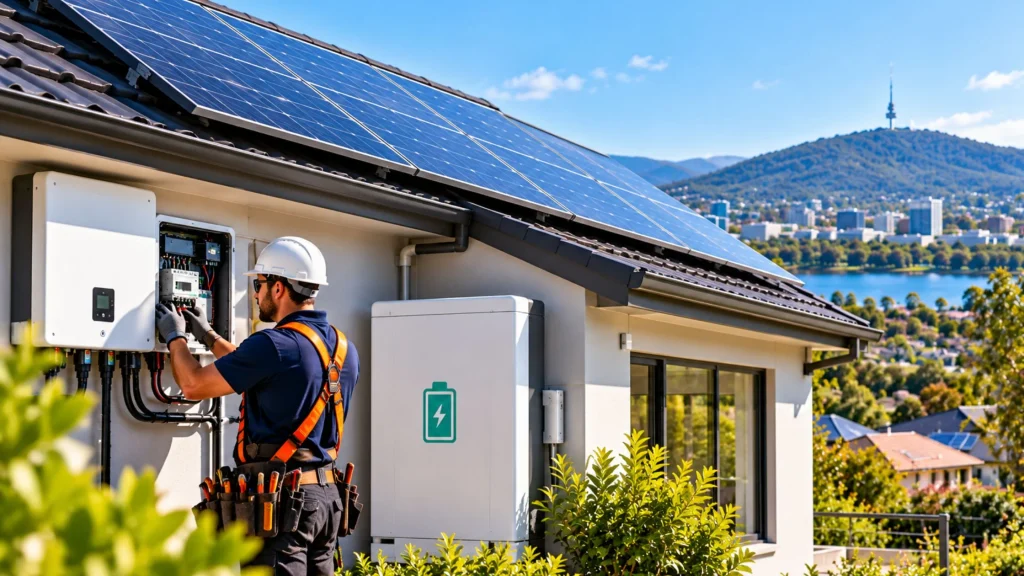
Solar technology has advanced significantly over the years. If your system was installed several years ago, newer equipment may offer better monitoring, improved integration and more flexible energy management.
There are several reasons to review your existing installation.
Growing Household Electricity Consumption
The demand for electricity in a household seldom remains constant over the years. When electric vehicles, ducted air conditioning, electric hot water systems or other appliances are added to the load, this can increase demand.
If they’ve gone up even though they have solar panels, they may no longer fit your lifestyle. Analyzing how much energy you use and how you produce it can help determine if more solar power, storage, or energy efficiency and management would be beneficial.
Ageing Solar Equipment
Whilst solar panels can generate electricity for years, this power output will slowly diminish over time. Generally inverters are expected to have a shorter life than panels and may need to be replaced during the lifetime of the system.
An older inverter may also not have the capabilities of newer inverter models, such as advanced monitoring and battery integration. An inspection can be used to decide if it is the most feasible to repair, replace or retain the existing equipment.
Better Use of Solar Electricity
Solar systems can be large and expensive to store the surplus power generated during the day for use at night, as is common in traditional solar systems. Households can then buy electricity during the late part of the day when the sun is not producing electricity.
An upgrade can help to increase the amount of electricity a household consumes. This may be accomplished by using appliances during sunny times, installing a battery or by installing monitors to show when electricity is being used.
Main Types of Solar System Upgrades
Not all homes require the same enhancement. This will depend on the existing equipment, roof space, electricity consumption and future plans.
1. Adding More Solar Panels
Adding panels may be worthwhile when household electricity demand has increased and the existing system does not generate enough energy.
Before expanding the array, an installer should assess the roof’s available space, orientation, shading and structural condition. Canberra homes may have different roof layouts, so the additional panels must suit the property’s physical limitations.
The existing inverter is another important consideration. Its capacity, input limits and compatibility with the proposed panels can determine whether expansion is possible without further equipment changes.
Adding panels is not simply a matter of attaching more modules to the roof. Electrical design, string configuration, protection requirements and network approval must also be considered.
2. Replacing an Older Solar Inverter
The inverter is used to convert the direct current produced by the solar panels to alternating current needed for household appliances.
Replacement of existing faulty, unreliable or near end-of-life (EOL) inverters can enhance system reliability. A good modern inverter could also provide more monitoring and integration capabilities.
But inverter replacement doesn’t always lead to higher solar production. The outcome will be determined by the existing system, replacement equipment, and reasons for any performance issues.
Firstly, before the selection of the new inverter, please verify the compatibility of the installed panels, electrical supply, export arrangements, and the planned battery.
3. Installing a Home Solar Battery
Excess energy produced during the day is stored in a battery for future use. It can help housekeep to use the energy generated by their panels to run their night-time appliances.
A battery may be most beneficial for Canberra households during periods of high electricity use after dark. The evening demand can be affected by heating, cooling, cooking and vehicle charging.
The selection of batteries should be in accordance with the real usage and not just go for the highest capacity batteries available. If the batteries are too big they may be under-used, and if they’re too small, they may not power the home during the evening hours.
The existing system should be evaluated to see if a hybrid inverter or a separate battery inverter is needed, a task that is best accomplished by an installer. Outages must also be specifically designed for backup power and not all battery installations provide back-up power.
4. Upgrading Energy Monitoring
Homeowners are better able to know the performance of their solar systems by monitoring.
A monitoring platform can show generated solar power, household consumption, imported/exported energy and battery activity, depending on inverter and sensor type.
This data can show if appliances consume electricity during this time when the sun isn’t producing as much electricity. It may also be useful in determining abnormal production changes that need investigation.
For instance, one homeowner might find it better to use the dishwasher in the middle of the day when the solar energy is available rather than late at night.
When panels and inverters are in good condition, monitoring the improvements can still be valuable.
Is Your Existing Solar System Suitable for Expansion?
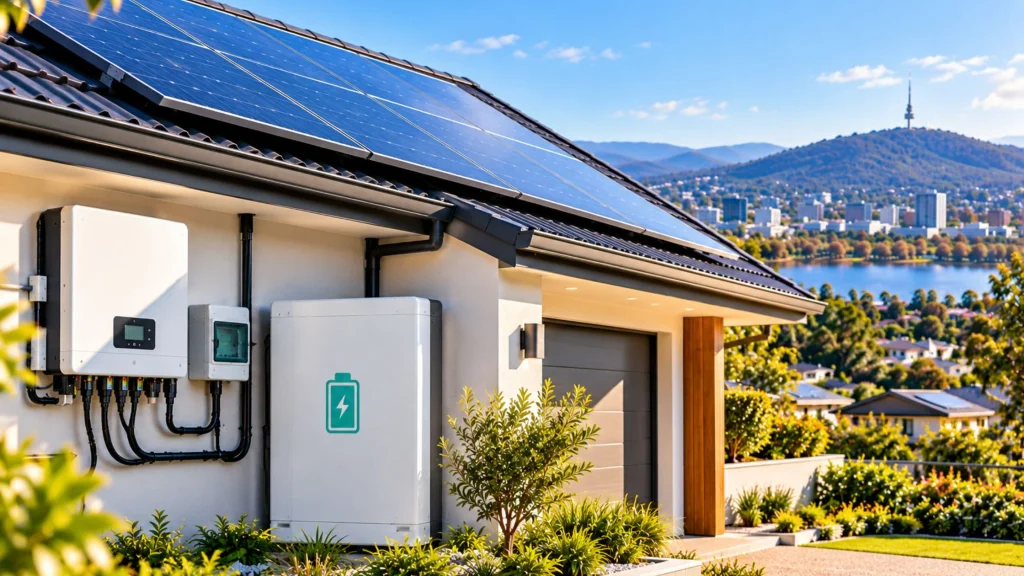
Discuss the possibility of upgrading before deciding what it is that your current installation cannot support. When evaluating, there are a number of factors that should be taken into account.
System Capacity and Inverter Limits
The existing system’s rated capacity is a very important starting point. An installer must verify the panel configuration, inverter specifications and limitations for operation.
The installation of panels outside the inverter’s range of configurations could lead to technical or compliance issues. Sometimes replacing the inverter or adding on equipment may need to be done.
Network export limits should also be taken into account to determine the maximum amount of electricity that can be exported to the grid.
Roof Space and Panel Orientation
The additional roof space will dictate if they can be installed safely and efficiently.
East and west facing panels can generate good annual production in Canberra, whereas north facing panels may generate more suitable production in the morning or afternoon. The ideal configuration will depend on the roof and the energy usage within the home.
The shading cast on the array by trees, adjacent buildings, chimneys and roof structures should be evaluated prior to expanding the array.
Existing Wiring and Switchboard
If any alterations are necessary in the electrical system of older installations, this must be done before any new equipment is installed. Inspection of the switchboard, protective devices, cabling, earthing and isolation arrangements should be carried out.
Upgrades are a chance to detect problems that impact safety or reliability. Work, if required, should be undertaken by suitably licensed and qualified electrical professionals to the standards required in Australia.
Planning Solar Upgrades for Canberra’s Climate
Canberra has warm summers, cold winters and a significant seasonal change in daylight. These conditions impact both electricity generation by the sun and household electricity demand.
During the summer months, the use of air conditioning can lead to greater electricity consumption during the day. Some of this demand may be satisfied by a well-designed solar system during the daytime.
During the winter months, the days are shorter and there is a need for extra heating. The solar generation can go down, especially on cloudy days, and comfort and hot water demands by households can go up.
This is why planning for the year is important. There is a danger that a summer-only upgrade may not be enough for the winter season.
Electricity bills and monitoring should be checked throughout the seasons at home. This will give a better overview of when energy is produced and when it is used, and whether or not the primary issue is a battery or additional panels.
Equipment selection and system design should also consider the orientation of the roof in the local area, shading and weather exposure.
Solar Batteries and Future Household Needs
A battery upgrade needs to accommodate both the present and expected changes.
The energy strategy of a household contemplating switching from gas heating to electric appliances will differ, for instance, from that of one that uses a great proportion of its electricity at night.
When choosing a battery, keep in mind:
- Electricity demand (daily and evening).
- The excess solar power that is available for charging.
- Usable battery capacity and charging capabilities.
- Compatibility to the existing Inverter.
- Backup power during power outages.
- Warranty terms and useful life.
- The amount of space available for installation and safety requirements.
Battery location matters. Installation shall be in accordance with the applicable safety rules, such as rules relating to mounting surfaces, separation distances and access.
It’s also important for homeowners to review product eligibility and installation requirements. The Clean Energy Regulator and the Clean Energy Council release pertinent guidance and product information.
A qualified installer will be able to tell you if an existing system will work with the battery and what adjustments might need to be made.
Understanding Solar System Upgrade Costs
The cost of an upgrade will be dependent on how much you need to upgrade, as well as the condition of your current installation. Adding a few panels is a different project from replacing an inverter, modifying a switchboard and installing battery storage.
The compatibility of equipment is an important criterion. If the system can be configured to keep the same inverter and wiring, then it might not be as extensive as a system with significant electrical modifications.
Other elements can impact the project including access to the roof, mounting needs, routes for cables and network approval.
Homeowners should ask to have a written plan that specifies the equipment, installation, exclusions, warranties, and performance of the system.
It is helpful to also compare expected benefits to the household’s own energy consumption. If a lot of the electricity is exported for a low feed-in credit, there may be little benefit from additional generation. A battery can enhance self-consumption, but the economic value will be based on the installation process, electricity tariffs, and usage.
Don’t base the choice on how much it will save you to advertise. Seek assumptions used in the calculation of the assumed benefits.
Rebates, Eligibility and Compliance
Energy improvements may be eligible for incentives from the government that can lower the initial costs for qualified households. Eligibility criteria, however, varies by program, equipment, and installation date and applicable requirements.
Federal battery incentives have restrictions on battery capacity, approved equipment and installation. It’s important for homeowners to verify existing requirements before entering into a contract, not assume that all upgrades will count.
There is also information on the ACT Government about energy at home and battery programs. Eligibility may vary from program to program, please refer to official ACT Government and Federal sources for current information.
Technical compliance is also crucial. Modifications/modifications to existing solar installations need to be evaluated in line with the standards and requirements relevant to the activity that is being undertaken.
The trustworthy installer should clarify pertinent approvals, product demands, electrical safety certification, and any required network processes.
Keep copies of the installation documents, equipment specifications, warranties and commissioning records. These logs can aid in future maintenance, warranty and further enhancements.
Common Solar Upgrade Mistakes to Avoid
Installing More Panels (Without Reviewing Consumption):
Additional panels will not have any effect if the problem is evening electricity consumption. Examine consumption patterns to determine if there is a need to generate more power or to use a battery or enhance energy management.
Choosing Equipment Without Checking Compatibility
There are certain technical limits between panels, inverters and batteries which must be taken into account. When keeping an older inverter, check compatibility prior to ordering equipment.
Overlooking Existing Faults
This can be caused by shading, damaged cables, performance problems with the inverter or other causes. Determine the cause before scaling up the system, or the root cause problem could still exist.
Ignoring Future Energy Requirements
When planning an electric vehicle or hot water to run electrically, make sure to bring these changes into the conversations at design time. Future needs may impact inverter selection, battery size and upgrade plan.
Focusing Only on Equipment Capacity
The more complex the system, the better the system is not necessarily. Useful or not depends on roof conditions, consumption, export restrictions, and equipment compatibility.
How to Prepare for a Solar System Upgrade
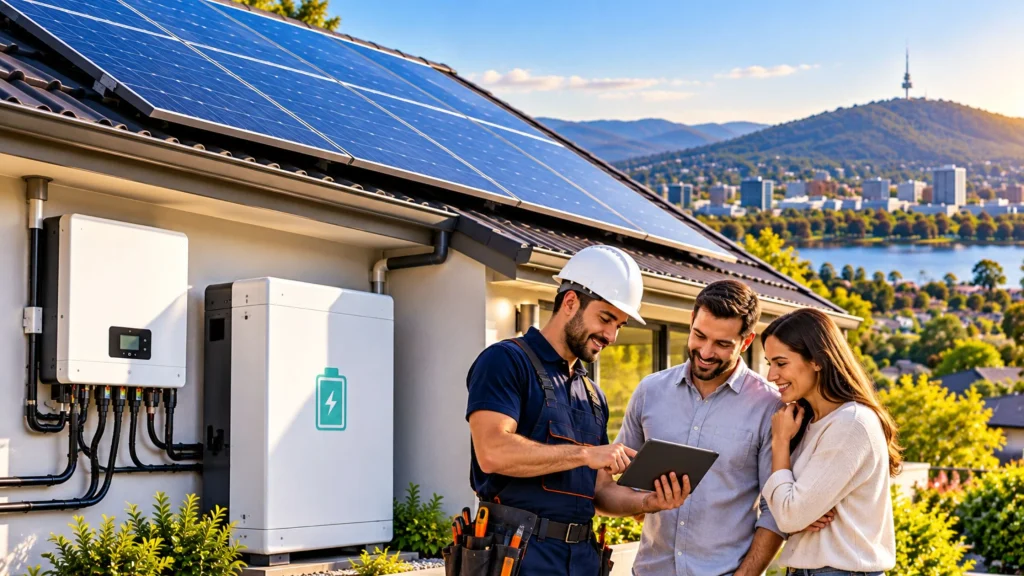
A few practical steps can make the process clearer and help you compare proposals.
Step 1: Collect your existing system details. Find the original installation documents, panel specifications, inverter model, warranty information and any available monitoring records.
Step 2: Review your electricity use. Check recent bills and identify when your household uses the most electricity. Include seasonal changes and any planned appliance additions.
Step 3: Arrange a professional inspection. Ask an appropriately qualified installer to assess the existing panels, inverter, switchboard, wiring and roof conditions.
Step 4: Compare suitable upgrade options. Request recommendations for additional panels, inverter replacement, battery storage or monitoring improvements where relevant.
Step 5: Confirm compliance and approvals. Clarify product compatibility, electrical requirements, network approval and any applicable incentive conditions.
Step 6: Review the proposal carefully. Make sure the scope of work, expected outcomes, warranties and commissioning arrangements are documented before proceeding.
Following these steps helps homeowners make decisions based on evidence rather than assumptions.